
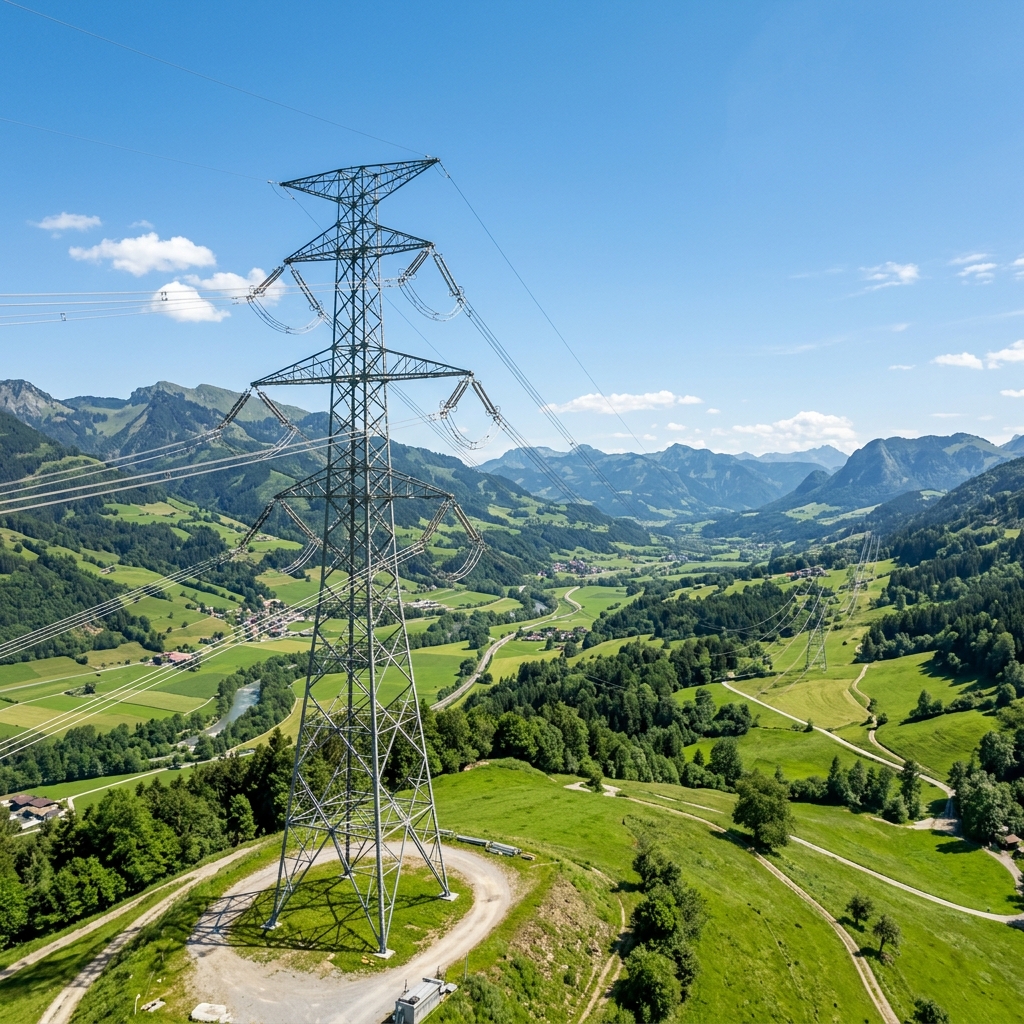
Drone electrical inspection is the use of unmanned aerial vehicles (UAVs) equipped with high-resolution cameras, thermal sensors and specialised inspection technologies to examine electrical infrastructure. It helps power utilities and infrastructure operators identify visible defects, monitor equipment conditions and collect geospatial information without relying entirely on conventional ground-based inspection methods.
From high-voltage transmission lines and distribution networks to electrical substations and transformers, drone technology is changing how infrastructure inspection data is collected and analysed.
By combining aerial imagery, thermal imaging, LiDAR mapping and AI-assisted analysis, drone electrical inspection can help organisations improve asset visibility, identify potential maintenance issues and make better-informed infrastructure decisions.
Looking for an electrical inspection partner? Explore Agmay's drone electrical inspection services for transmission lines, distribution networks, substations, thermal imaging and LiDAR-based corridor mapping.
What Is Drone Electrical Inspection?
Drone electrical inspection is an aerial inspection process in which an unmanned aircraft captures visual, thermal or geospatial information about electrical assets.
The drone carries specialised sensors to collect detailed images and measurements of power infrastructure. Inspection teams then process and analyse the collected data to identify potential defects, document asset conditions and prepare maintenance reports.
A typical drone electrical inspection may cover:
- High-voltage and extra-high-voltage transmission lines
- Electricity distribution networks
- Electrical transmission towers and poles
- Insulators, conductors and connectors
- Substations and switchyards
- Power transformers and electrical equipment
- Vegetation near overhead power lines
- Electrical infrastructure across renewable energy projects
The objective is to convert aerial data into useful inspection information for engineers, asset managers and maintenance teams.
How Are Drones Used for Electrical Inspection?
Industrial drones can support several types of electrical infrastructure inspection.
1. Drone Power Line Inspection
Power line inspection is one of the major applications of drone technology in the electricity sector.
Drones equipped with optical zoom cameras can capture close-up images of transmission towers, conductors, insulators and associated hardware.
Common inspection targets include:
- Broken or damaged insulators
- Corrosion on tower structures
- Missing bolts and cotter pins
- Damaged conductor strands
- Loose connectors and jumper assemblies
- Damaged vibration dampers and spacers
- Bird nests and other visible obstructions
- Vegetation encroachment along transmission corridors
The collected imagery helps inspection teams identify locations requiring closer examination or maintenance.
2. Drone Substation Inspection
Electrical substations contain critical equipment that requires regular condition monitoring.
Drones can capture aerial and close-range visual information from selected substation assets, subject to site-specific flight restrictions and safety procedures.
Inspection targets may include:
- Power transformers
- Insulators and bushings
- Busbars and connections
- Circuit breakers
- Switchyard structures
- Lightning arresters
- Cooling equipment
- Visible corrosion and structural damage
Thermal sensors can also be used for selected inspections to identify abnormal temperature patterns in accessible equipment.
Drone-based inspection complements conventional electrical testing and specialist condition-monitoring methods. It does not replace equipment-specific electrical tests.
3. Drone Thermal Inspection of Electrical Equipment
Thermal imaging is an important technology in electrical infrastructure inspection.
Radiometric thermal cameras measure infrared radiation and provide temperature information that can help identify abnormal heating patterns.
Depending on the asset, operating conditions and inspection methodology, thermal drone inspections may help identify:
- Overheated electrical connectors
- Abnormal temperature differences between phases
- Heating around joints and terminals
- Transformer surface temperature anomalies
- Potentially overloaded electrical components
- Abnormal heating in selected switchyard equipment
Thermal results must be interpreted carefully. Load conditions, emissivity, reflected temperature, viewing angle, weather and camera calibration can influence measurements.
A thermal image alone does not establish the root cause of an electrical fault. Findings should be reviewed by qualified personnel and investigated using appropriate diagnostic procedures.
4. Drone Distribution Network Inspection
Electricity distribution networks contain extensive infrastructure connecting substations to consumers.
Drone surveys can help inspect overhead distribution poles, crossarms, transformers, insulators, stay wires and associated electrical components.
For distribution utilities and DISCOMs, drone inspection data can support:
- Pole and crossarm condition assessment
- Identification of visible equipment damage
- Distribution transformer visual inspection
- Mapping of overhead electrical infrastructure
- Vegetation and encroachment monitoring
- Maintenance documentation and asset inventory
Geotagged imagery can help maintenance teams locate reported defects more efficiently.
5. LiDAR-Based Power Line Inspection
LiDAR (Light Detection and Ranging) uses laser measurements to generate detailed three-dimensional point clouds.
In power infrastructure projects, drone-mounted LiDAR can support transmission corridor mapping, vegetation analysis and spatial assessment of overhead assets.
LiDAR-based workflows may help with:
- Power line corridor mapping
- Vegetation proximity assessment
- Terrain and elevation modelling
- Asset positioning
- Three-dimensional infrastructure visualisation
- Digital terrain and surface models
When combined with suitable processing and engineering criteria, LiDAR data can support vegetation clearance analysis and help identify areas that require further investigation.
6. AI-Based Electrical Defect Detection
Artificial intelligence and computer vision can assist with analysing large volumes of drone inspection imagery.
AI-assisted systems can help identify and classify visual patterns associated with:
- Broken insulators
- Missing tower hardware
- Corrosion
- Damaged conductors
- Loose fittings
- Bird nests
- Vegetation encroachment
- Other visible infrastructure anomalies
Automated detection can help organise inspection findings and prioritise images for review.
However, AI detection is not the same as confirmed fault diagnosis. Model performance depends on image quality, training data, asset types and operating conditions. Engineering review is essential before maintenance decisions are made.
Technologies Used in Drone Electrical Inspection
A professional drone inspection workflow may combine several technologies depending on the asset and inspection objective.
| Technology | Application |
|---|---|
| High-resolution RGB cameras | Visual inspection of towers, conductors and equipment |
| Optical zoom cameras | Close-range inspection of electrical components |
| Thermal cameras | Identification of abnormal temperature patterns |
| LiDAR sensors | 3D mapping and vegetation clearance assessment |
| RTK/PPK positioning | Improved georeferencing of inspection data |
| Artificial intelligence | Image analysis and potential defect classification |
| GIS mapping | Asset location, spatial analysis and reporting |
Not every inspection requires every sensor. The payload should be selected according to the infrastructure, required outputs and project conditions.
How Does a Drone Electrical Inspection Work?
A structured inspection programme typically follows these stages:
1. Inspection Planning
The team identifies the electrical assets, inspection objectives, voltage information, route, site conditions and required deliverables.
2. Safety and Regulatory Assessment
The operating team assesses electrical hazards, airspace restrictions, nearby infrastructure, flight permissions and the utility's site-specific safety requirements.
3. Drone and Sensor Selection
An appropriate drone platform is selected with the required optical, thermal or LiDAR payload.
4. Aerial Data Collection
The drone captures planned imagery, thermal information or LiDAR observations while the operating team monitors flight conditions and data quality.
5. Data Processing
Collected data is organised, processed and georeferenced. Photographs may be used for visual analysis, while thermal and LiDAR datasets require their respective processing workflows.
6. Defect Identification and Engineering Review
Potential defects are identified through visual analysis or AI-assisted tools. Qualified reviewers examine the findings and assess whether further investigation is required.
7. GIS Mapping and Reporting
Inspection findings are linked to asset locations and organised into reports, image records and geospatial datasets.
8. Maintenance Recommendations
The inspection results are shared with the utility or asset owner to support maintenance planning, prioritisation and follow-up inspection.
Benefits of Drone Electrical Inspection
Drone technology offers several operational advantages when integrated into a properly planned electrical inspection programme.
- Improved inspection access: Aerial platforms can capture imagery of selected difficult-to-access infrastructure.
- Reduced exposure to work at height: Drones can reduce the need for personnel to climb certain structures solely for visual data collection.
- Detailed visual records: High-resolution imagery provides a record of asset conditions at the time of inspection.
- Thermal condition assessment: Radiometric sensors can help identify abnormal heating patterns.
- Faster data collection: Large areas and long infrastructure corridors can be surveyed efficiently, depending on flight conditions and project requirements.
- Geospatial documentation: GPS-tagged findings help maintenance teams locate assets and reported defects.
- Repeatable monitoring: Periodic surveys make it possible to compare visual conditions across inspection dates.
- Data-driven maintenance: Organised inspection records can support maintenance prioritisation and asset management.
Drone inspection does not eliminate all ground inspections, specialist testing or maintenance work. Its greatest value comes from combining aerial information with existing engineering and maintenance processes.
Drone Electrical Inspection vs Traditional Electrical Inspection
Both drone-based and conventional inspection methods have important roles in electrical infrastructure maintenance.
| Consideration | Drone inspection | Traditional inspection |
|---|---|---|
| Data collection | Aerial imagery and sensor data | Ground observations and direct measurements |
| Asset access | Useful for selected difficult-to-access locations | May require climbing, platforms or specialised access |
| Visual documentation | High-resolution geotagged imagery | Depends on inspection equipment and documentation |
| Thermal assessment | Possible with suitable radiometric payloads | Possible with handheld thermal cameras |
| Spatial mapping | Can integrate with GIS and LiDAR | Requires separate surveying or mapping methods |
| Electrical testing | Limited to suitable remote observations | Supports direct electrical tests and measurements |
| Maintenance work | Identifies and documents potential issues | Supports direct repair and detailed testing |
The most effective inspection programme often combines drone surveys, conventional inspections and specialist electrical diagnostic techniques.
Drone Electrical Inspection in India
India's electricity infrastructure includes extensive transmission networks, distribution systems, substations and renewable energy connections. Monitoring these assets is important for reliability, maintenance planning and infrastructure development.
The Central Electricity Authority's Guidelines for Benchmarking of Operation & Maintenance Norms for Distribution Utilities explicitly discusses drone-based inspection of lines. It identifies applications including inspection of critical lines and towers, distribution asset mapping, fault detection, maintenance tracking, vegetation assessment and encroachment monitoring.
The guidelines recognise drone inspection as a useful tool within modern utility maintenance and asset-management workflows.
Drone operators in India must also consider the applicable Drone Rules, airspace restrictions, operational permissions and site-specific safety requirements. Requirements should be checked for each planned operation rather than assuming that every power corridor can be flown without additional clearance.
What Should a Professional Drone Electrical Inspection Report Include?
An inspection report should provide useful information for engineers and asset managers, rather than simply presenting a collection of photographs.
Depending on the project scope, deliverables may include:
- Executive inspection summary
- Asset identification and inventory
- Geotagged high-resolution photographs
- Thermal images and relevant temperature information
- Potential defect descriptions
- Defect location and asset references
- GIS maps and spatial datasets
- Defect prioritisation for engineering review
- Recommended follow-up inspection or maintenance actions
- Supporting image records and technical observations
For large utility networks, structured inspection data can also support asset management platforms and maintenance information systems.
Choosing a Drone Electrical Inspection Service Provider
Before selecting a drone inspection company, utilities and infrastructure owners should evaluate the following:
- Inspection experience: Does the provider understand transmission lines, distribution networks and electrical infrastructure?
- Sensor capabilities: Can the provider supply suitable RGB, zoom, thermal or LiDAR payloads?
- Flight safety: Does the team follow appropriate electrical safety procedures and aviation requirements?
- Data quality: Are imagery, positioning and processing methods suitable for the intended inspection?
- Engineering validation: Are potential defects reviewed by appropriately qualified personnel?
- Reporting capabilities: Can the provider supply geotagged images, asset records, GIS outputs and actionable reports?
- Data management: Can inspection information be organised for future comparison and maintenance planning?
The right provider should explain the inspection methodology, limitations, deliverables and safety arrangements before the project begins.
Drone Electrical Inspection Services by Agmay Technologies
Agmay Technologies provides drone-based electrical infrastructure inspection and geospatial solutions for power utilities, transmission operators, distribution companies and infrastructure owners.
Our electrical inspection service page covers several inspection areas, including:
- Transmission line inspection
- Distribution network inspection
- Substation and electrical equipment inspection
- Thermal imaging and visual inspection
- LiDAR-based corridor mapping
- Vegetation and right-of-way monitoring
- AI-assisted defect analysis
- GIS mapping and inspection reporting
By combining aerial data collection with image analysis and geospatial workflows, Agmay aims to help infrastructure operators improve asset visibility and organise inspection information for maintenance planning.
Whether the requirement involves transmission corridors, distribution networks or selected electrical infrastructure, the inspection approach should be designed around the assets, site conditions and expected deliverables.
Looking for a drone electrical inspection service provider?
Discuss your transmission corridors, substations, distribution assets and reporting requirements with Agmay Technologies.
Explore Electrical Inspection Services ↗Frequently Asked Questions About Drone Electrical Inspection
What is drone electrical inspection?
Drone electrical inspection uses unmanned aircraft equipped with optical, thermal or specialised sensors to inspect electrical infrastructure. It helps collect visual and geospatial information about power lines, transmission towers, substations and other electrical assets.
How are drones used to inspect power lines?
Drones capture close-up images and, where suitable, thermal or LiDAR data from power line infrastructure. Inspection teams review the information to identify visible damage, corrosion, broken insulators, missing hardware and other potential issues.
Can drones inspect live electrical power lines?
Drones can be used to collect inspection data around certain energised power infrastructure when the operation has been specifically assessed and approved under applicable aviation, utility and electrical safety procedures. This does not mean every drone, payload or flight condition is suitable for live-line inspection.
Can drones detect electrical hotspots?
Yes. Drones equipped with suitable radiometric thermal cameras can capture temperature information that may help identify abnormal heating in accessible electrical components. Results require appropriate inspection conditions and qualified interpretation.
What is the difference between thermal and visual drone inspection?
Visual inspection uses conventional cameras to identify visible physical conditions such as cracks, corrosion and missing components. Thermal inspection measures infrared radiation to reveal temperature patterns that may indicate abnormal heating. The two methods provide different but complementary information.
Can AI detect electrical faults from drone images?
AI-based computer vision can help identify and classify visual patterns associated with potential defects. However, automated results should be validated by qualified reviewers and should not be treated as a substitute for electrical testing or engineering diagnosis.
Are drone electrical inspections suitable for substations?
Yes. Drones can support selected visual and thermal inspections of substation equipment and structures. Each operation must account for electrical clearances, obstacles, electromagnetic conditions, site restrictions and utility safety procedures.
What information is included in a drone electrical inspection report?
A report may include geotagged photographs, asset identification, defect observations, thermal imagery, GIS maps, inspection summaries and recommended follow-up actions. The deliverables depend on the agreed project scope.
How often should electrical infrastructure be inspected using drones?
Inspection frequency depends on asset criticality, operating conditions, utility maintenance policies, applicable regulations and previous inspection findings. Utilities should establish inspection schedules based on their asset-management and risk-assessment requirements.
What is the cost of drone electrical inspection?
The cost depends on the length of the transmission corridor, number of towers or assets, voltage category, sensor requirements, site accessibility, reporting scope and deployment requirements. A project-specific quotation is necessary for an accurate estimate.
Conclusion
Drone electrical inspection is becoming an important part of modern power infrastructure monitoring. By combining high-resolution cameras, thermal imaging, LiDAR, AI-assisted analysis and GIS mapping, drone technology can help utilities collect detailed information about transmission lines, distribution networks, substations and electrical assets.
The technology supports better visual documentation, potential defect identification, infrastructure mapping and maintenance planning when integrated with qualified engineering review and established safety procedures.
For organisations looking to modernise their electrical infrastructure inspection programmes, the right combination of drone technology, trained operators and reliable geospatial reporting can make a meaningful difference.
Explore Agmay Technologies' drone electrical inspection solutions to discuss your project requirements.