
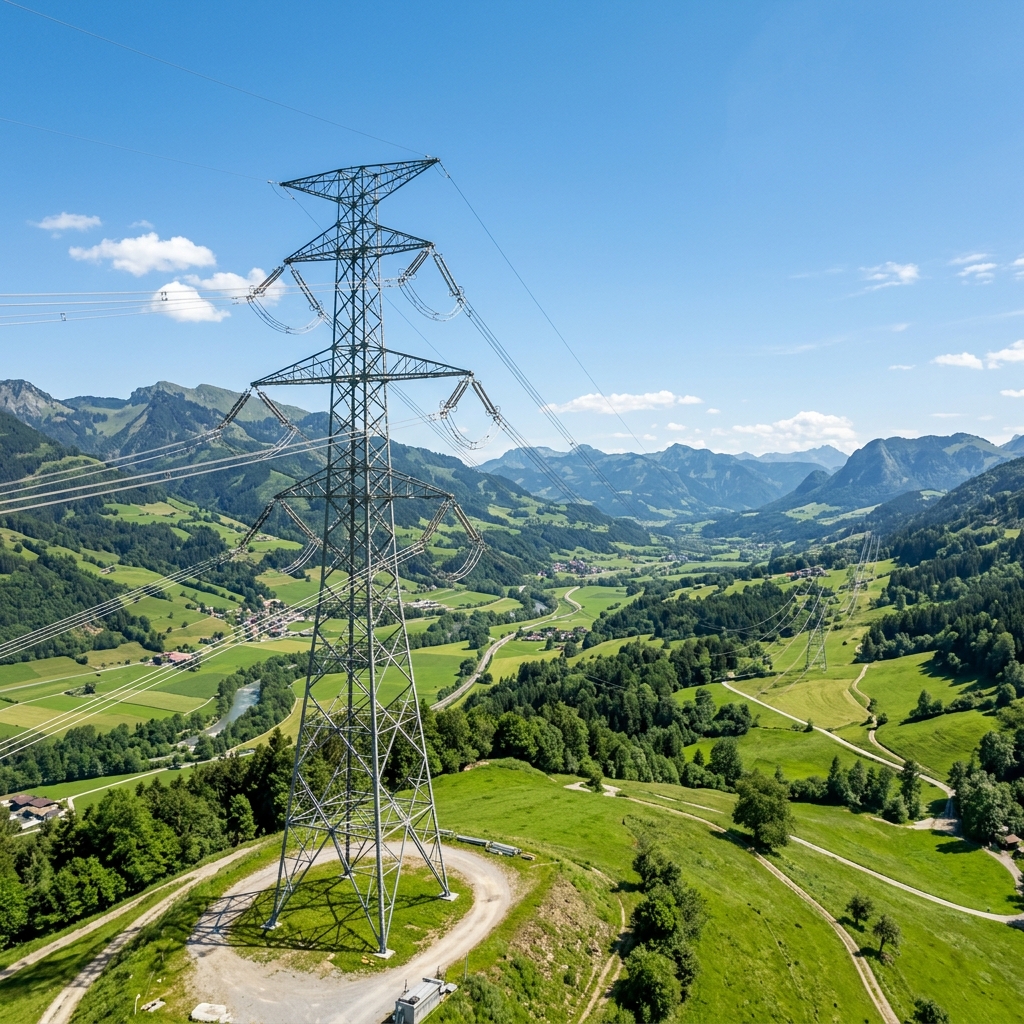
Electrical substations are critical components of power transmission and distribution networks. They contain transformers, circuit breakers, isolators, busbars, insulators, surge arresters and other high-voltage electrical equipment that require regular condition monitoring. Drone substation inspection uses unmanned aerial vehicles (UAVs) equipped with high-resolution cameras, thermal imaging sensors and advanced data-processing technologies to examine electrical assets, identify visible abnormalities and support substation maintenance.
Traditional substation inspections involve ground-level observations, manual equipment checks and specialised inspection procedures. However, certain equipment is positioned at considerable heights or in locations where obtaining detailed visual information can be challenging.
Drone-based inspection provides an additional aerial perspective, allowing inspection teams to capture detailed photographs and thermal images of selected substation equipment.
When combined with radiometric thermal imaging, AI-assisted image analysis and structured inspection reporting, UAV technology can support more comprehensive substation asset monitoring.
For electricity transmission companies, distribution utilities, power generation facilities and industrial infrastructure operators, drone substation inspection offers an additional approach to documenting electrical equipment conditions and supporting maintenance decisions.
Looking for a substation inspection partner? Explore Agmay's drone electrical inspection services for substation visual inspection, thermal imaging, AI-assisted analysis and digital reporting.
What Is Drone Substation Inspection?
Drone substation inspection is the process of using unmanned aerial vehicles to examine electrical substations and collect visual, thermal and geospatial information about their infrastructure.
Substations contain multiple electrical components arranged according to their voltage levels, equipment configurations and operational requirements.
Depending on the inspection scope, a drone survey can capture information about:
- Power transformers and associated external components.
- Circuit breakers and disconnectors.
- Isolators and earthing switches.
- Busbars and electrical connections.
- Current transformers (CTs).
- Potential or voltage transformers (PTs/VTs).
- Surge arresters.
- Insulators and supporting structures.
- Transformer bushings and radiators.
- Outdoor switchyard equipment.
- Visible corrosion and structural deterioration.
- Potential thermal anomalies.
High-resolution optical cameras provide detailed visual documentation, while radiometric thermal cameras help identify abnormal temperature patterns across selected equipment.
The collected data can be processed and organised into inspection reports for engineering assessment and maintenance planning.
Drone inspection is a supplementary inspection method. It does not replace conventional electrical testing, equipment diagnostics, physical examination or approved substation maintenance procedures.
Why Is Substation Inspection Important?
Substations operate under demanding electrical, mechanical and environmental conditions.
Electrical equipment is exposed to operating loads, temperature variations, moisture, pollution, corrosion, vibration and other environmental factors.
Over time, these conditions can contribute to equipment deterioration and abnormalities that require investigation.
Regular substation inspection helps utilities:
- Monitor the external condition of electrical equipment.
- Identify visible damage and deterioration.
- Detect potential overheating in electrical connections.
- Examine insulators and supporting structures.
- Document transformer external conditions.
- Identify corrosion and oil leakage.
- Monitor structural and equipment surroundings.
- Maintain digital inspection records.
- Support condition-based maintenance.
- Prioritise equipment requiring further assessment.
An effective inspection programme combines visual observations, thermal assessment, electrical testing and specialist equipment diagnostics according to the asset's maintenance requirements.
How Does Drone Substation Inspection Work?
A drone-based substation inspection programme involves several stages, from mission planning and equipment selection to image processing and engineering review.
1. Substation Survey and Inspection Planning
Before deploying a drone, the inspection team reviews the substation layout and identifies the equipment requiring inspection.
Substations contain high-voltage conductors, busbars, transformers, metal structures and other electrical installations. Consequently, flight planning requires careful consideration of the operational environment.
Planning considerations include:
- Substation layout and equipment locations.
- Voltage levels and equipment configurations.
- Energized and de-energized areas.
- Electrical approach distances.
- Electromagnetic field exposure.
- Obstacles and overhead structures.
- GNSS positioning reliability.
- Flight routes and inspection angles.
- Airspace restrictions and permissions.
- Wind and weather conditions.
- Required optical and thermal sensor capabilities.
The inspection team develops a flight plan that defines the inspection targets, suitable observation positions and operational safety procedures.
The flight plan must be reviewed against the substation owner's safety requirements and the limitations of the selected UAV platform.
2. High-Resolution Visual Inspection of Substation Equipment
High-resolution RGB cameras allow inspection teams to capture detailed images of electrical equipment and supporting structures.
Depending on the equipment and inspection requirements, drones can capture images of:
- Transformer enclosures.
- Bushings and external connections.
- Circuit breaker assemblies.
- Isolator mechanisms.
- Busbar connections.
- Insulator surfaces.
- Surge arresters.
- Cable terminations.
- Supporting steel structures.
- Equipment foundations and surrounding areas.
The captured imagery can help identify visible abnormalities such as corrosion, cracks, missing hardware, external damage, contamination and deteriorating components.
Optical zoom cameras provide closer views of selected equipment without requiring the inspector to physically access every observation point.
Image quality depends on resolution, camera stability, viewing angle, distance, lighting and environmental conditions.
3. Drone Thermal Inspection of Substations
Thermal imaging is one of the important applications of drone-based substation inspection.
Electrical equipment generates heat during operation. Abnormal temperature patterns can sometimes indicate developing equipment problems that require further investigation.
Radiometric thermal cameras capture infrared information that can be used to assess temperature distribution across accessible equipment surfaces.
Potential inspection targets include:
- Transformer bushings.
- Electrical terminals.
- Busbar connections.
- Circuit breaker connections.
- Isolator contacts.
- Current transformer connections.
- Cable terminations.
- Surge arrester connections.
- Selected switchgear components.
Thermal imaging can help identify:
Overheated electrical connections: Abnormal temperature patterns around connectors and terminals may indicate a potential connection problem.
Uneven phase temperatures: Temperature differences between comparable electrical phases may require further investigation.
Transformer external hotspots: Thermal observations can help identify unusual heating patterns on accessible transformer surfaces and connections.
Switchgear heating: Thermal inspection can help identify potential overheating around selected switchgear connections and associated equipment.
Abnormal component temperature distribution: Differences across comparable equipment components may indicate conditions requiring engineering assessment.
Thermal findings must be interpreted in relation to electrical load, ambient temperature, wind, emissivity, reflected radiation, camera calibration and equipment operating conditions.
A thermal hotspot does not automatically establish the presence of an electrical fault. Qualified personnel should review the findings before maintenance decisions are made.
4. Transformer Inspection Using Drones
Power transformers are among the most important assets within electrical substations.
They perform voltage transformation and support the transfer of electricity between different stages of the power network.
Drones equipped with high-resolution cameras can capture external images of transformer assemblies and associated components.
Potential inspection observations include:
- External transformer tank corrosion.
- Visible oil leakage.
- Damaged radiator fins.
- External bushing deterioration.
- Damaged cooling equipment.
- Visible condition of conservator tanks.
- Corrosion around external fittings.
- Damaged cable connections.
- Deterioration of supporting structures.
- Visible abnormalities around transformer accessories.
Thermal imaging can provide additional information about temperature patterns across accessible external surfaces and electrical connections.
However, drone imagery cannot independently assess internal transformer conditions.
Important transformer diagnostics such as dissolved gas analysis (DGA), oil quality testing, insulation resistance measurement, winding resistance testing and other electrical tests require appropriate specialist procedures.
Drone inspection should therefore complement the transformer maintenance programme rather than replace established diagnostic methods.
5. Circuit Breaker and Isolator Inspection
Circuit breakers and isolators are essential components of substation switching and protection systems.
Circuit breakers interrupt electrical current under specified operating conditions, while isolators provide electrical isolation according to the equipment's design and operating procedures.
Drone-based visual inspection can help document:
- External circuit breaker condition.
- Visible corrosion.
- Damaged insulators.
- External connections.
- Supporting structures.
- Operating mechanism enclosures.
- Isolator blade alignment observations.
- Visible damage to electrical fittings.
- Missing or displaced hardware.
Thermal imaging can also help identify abnormal temperature patterns around selected electrical connections.
However, drone photographs cannot confirm the complete mechanical or electrical performance of switching equipment.
Contact resistance measurements, timing tests, insulation tests and functional assessments require appropriate specialist testing.
6. Busbar and Insulator Inspection
Busbars distribute electrical power between different substation circuits and equipment assemblies.
Insulators support electrical isolation between energized components and grounded structures.
Both require appropriate inspection and maintenance.
High-resolution aerial imagery can help identify:
- Visible busbar corrosion.
- Damaged supporting insulators.
- Cracked or chipped insulator surfaces.
- External contamination.
- Damaged connectors.
- Missing or deteriorated fittings.
- Visible abnormalities in supporting structures.
Optical zoom cameras can provide detailed views of selected components.
The inspection should be designed around equipment configuration and appropriate electrical safety clearances.
Visual observations cannot independently establish insulation strength, contact resistance or internal material condition.
7. AI-Assisted Substation Defect Identification
Modern substations contain many equipment types and components that require regular inspection.
Reviewing large volumes of visual and thermal inspection data manually can be challenging.
Artificial intelligence and computer vision can assist engineers by identifying equipment components and potential abnormalities within collected imagery.
Depending on the available training data and validated detection models, AI-assisted inspection can support the identification of:
- Insulator damage.
- Corrosion patterns.
- Missing hardware.
- Visible oil leakage.
- Damaged external fittings.
- Abnormal equipment positioning.
- Potential thermal hotspots.
- Surface deterioration.
Machine learning models can also help classify equipment images and organise inspection observations.
Research published in Energy Informatics in 2024 investigated an improved YOLOv4-based intelligent substation inspection system using infrared imagery and equipment recognition.
The study reported a 95.12% recognition accuracy for its proposed model under its experimental conditions. This is a research-specific result, not a general performance guarantee for commercial drone inspection systems.
AI-assisted findings should be reviewed by qualified engineering personnel before maintenance recommendations are finalised.
8. Geospatial Documentation and Inspection Reporting
After the drone survey, collected images and sensor datasets are processed and organised into inspection deliverables.
Depending on the project scope, these can include:
- High-resolution equipment photographs.
- Annotated defect images.
- Thermal inspection records.
- Radiometric temperature information.
- Equipment identification records.
- Geotagged inspection photographs.
- Defect classification.
- Substation asset inventory.
- Inspection summary reports.
- Maintenance investigation recommendations.
GIS and digital asset management systems can help associate inspection information with equipment locations and asset records.
This allows maintenance teams to identify the location of observed abnormalities and organise follow-up investigations.
What Substation Equipment Can Drones Inspect?
Different substation assets require different inspection perspectives and assessment methods.
| Substation equipment | Potential inspection observations |
|---|---|
| Power transformers | External damage, corrosion and oil leakage |
| Transformer bushings | Visible damage and thermal anomalies |
| Circuit breakers | External condition, corrosion and connection heating |
| Isolators | Visible damage, corrosion and connection abnormalities |
| Busbars | Visible corrosion and thermal anomalies |
| Current transformers | External deterioration and connection heating |
| Potential transformers | External damage and visible deterioration |
| Surge arresters | Cracks, contamination and visible damage |
| Insulators | Cracks, contamination and physical deterioration |
| Cable terminations | External damage and thermal anomalies |
| Supporting structures | Corrosion, missing hardware and deterioration |
| Transformer radiators | Visible damage and abnormal surface temperature patterns |
The findings are limited to observable external conditions and suitable sensor measurements. Internal equipment conditions and electrical performance require additional diagnostic procedures.
Technologies Used in Drone Substation Inspection
The effectiveness of a substation inspection depends on selecting the appropriate drone platform, imaging equipment and data-processing methods.
High-Resolution RGB Cameras
RGB cameras capture visible-light photographs of electrical equipment and infrastructure.
They help document external damage, corrosion, contamination, missing hardware and other physical abnormalities.
Optical Zoom Cameras
Optical zoom cameras provide closer views of components located at a distance.
They are useful for examining selected busbar connections, insulators, transformer fittings and other equipment where detailed visual documentation is required.
Radiometric Thermal Cameras
Radiometric thermal cameras capture infrared information that can be used to assess temperature patterns across electrical equipment.
They support the identification of potential hotspots and abnormal temperature distributions under suitable operating conditions.
LiDAR Sensors
LiDAR provides three-dimensional spatial information about the surrounding environment.
In suitable substation survey applications, LiDAR can support:
- Substation layout mapping.
- Three-dimensional infrastructure documentation.
- Equipment spatial modelling.
- Structural surveys.
- Digital asset visualisation.
The suitability of LiDAR depends on the substation environment, survey objective and required level of detail.
GNSS and RTK Positioning
GNSS and RTK positioning technologies can support geospatial documentation and asset location mapping.
However, metallic structures and complex electrical installations can interfere with satellite positioning and create multipath effects.
The inspection workflow must therefore account for positioning limitations and use suitable alternative positioning or reference methods where required.
Artificial Intelligence and GIS
AI-assisted image analysis can help identify and classify potential equipment defects.
GIS platforms provide a spatial environment for organising inspection information, equipment locations and associated findings.
Benefits of Drone Substation Inspection
Drone-based inspection can provide several advantages when integrated into an appropriate electrical asset maintenance programme.
1. Improved Visibility of Elevated Equipment
Substation equipment may be installed at heights or in locations where ground-level observation provides limited visibility.
Aerial inspection can capture additional viewing angles and detailed images of selected components.
2. Reduced Need for Certain Physical Access Activities
Drones can collect visual information from selected equipment without requiring personnel to physically access every inspection point.
This can reduce exposure to certain working-at-height hazards, although it does not eliminate all electrical or operational risks.
3. Combined Visual and Thermal Inspection
Combining optical and thermal imagery provides different types of inspection information.
Visual images document physical conditions, while thermal imagery helps identify abnormal temperature patterns.
4. Digital Inspection Documentation
Digital photographs, thermal records and structured reports create inspection records that can support asset monitoring and maintenance history.
5. Support for Condition-Based Maintenance
Inspection findings can be organised according to equipment type, location and observed condition.
This helps engineering teams identify assets that require further investigation.
6. Integration with Intelligent Inspection Systems
AI-assisted processing and digital asset management can help organise large volumes of substation inspection information.
This provides opportunities to integrate aerial inspection data into existing utility maintenance workflows.
Drone Substation Inspection vs Traditional Inspection
Conventional substation inspection includes ground-level patrols, manual equipment examination, specialist electrical testing and other utility-approved methods.
Drone inspection provides an additional approach to collecting visual and thermal data.
| Inspection factor | Traditional inspection | Drone-based inspection |
|---|---|---|
| Elevated equipment visibility | Ground observation or physical access | Aerial multi-angle imaging |
| Transformer external inspection | Ground-level visual assessment | Aerial visual documentation |
| Thermal inspection | Suitable handheld thermal equipment | Can integrate aerial radiometric cameras |
| Insulator assessment | Ground observation or physical access | High-resolution aerial imagery |
| Busbar inspection | Manual or specialist inspection | Aerial visual and thermal imagery |
| Documentation | Manual records and photographs | Digital inspection datasets |
| Defect analysis | Engineer-led assessment | Engineer review with optional AI assistance |
| Asset mapping | Existing survey and GIS systems | Can integrate geospatial inspection information |
Drone inspection does not replace established substation testing and maintenance methods.
A comprehensive inspection programme may combine aerial surveys, ground inspections, electrical testing, equipment diagnostics and specialist engineering assessments.
Can Drones Fly Inside Energized Electrical Substations?
Drone operations inside or near energized substations require particularly careful planning.
Unlike open transmission corridors, substations contain concentrated electrical equipment, busbars, switching assemblies, metal structures and potentially complex electromagnetic environments.
These conditions can create additional risks for drone positioning, navigation, communication and flight control systems.
Important considerations include:
- Electrical approach distances.
- Equipment voltage and configuration.
- Electric and magnetic field exposure.
- Electromagnetic interference.
- UAV navigation reliability.
- GNSS signal availability.
- Metal structures and obstacle clearance.
- Wind and turbulence around equipment.
- Battery and communication reliability.
- Substation owner operating procedures.
- Applicable aviation permissions.
Research published in Scientific Reports in 2025 examined UAV inspection path planning around high-voltage substation equipment, highlighting the importance of electromagnetic exposure and safe-distance planning.
The study demonstrates why substation flight routes must be engineered rather than relying on generic drone flight paths.
Not every commercial drone is suitable for substation environments.
A drone should not be flown close to energized equipment merely because it has obstacle avoidance or a high-resolution camera. The equipment, route and operational procedures must be assessed for the specific installation.
Drone inspection must also be distinguished from physical electrical maintenance. Aerial image acquisition does not authorise contact with energized equipment.
Drone Substation Inspection in India
India's electricity infrastructure includes transmission substations, distribution substations, generation switchyards, industrial substations and renewable energy electrical installations.
These facilities contain critical equipment that requires regular monitoring and maintenance.
Drone-based inspection can provide supplementary visual and thermal information for:
- Transmission substations.
- Distribution substations.
- Power generation switchyards.
- Renewable energy substations.
- Industrial electrical substations.
- Grid interconnection facilities.
- High-voltage electrical installations.
Drone Regulations and Operational Requirements in India
Commercial drone operations in India are governed by the applicable aviation framework, including the Drone Rules, 2021 and subsequent amendments.
Operators must assess the relevant requirements for:
- Drone classification and registration.
- Applicable certification.
- Remote pilot qualifications.
- Airspace zone restrictions.
- Flight permissions.
- Operational restrictions.
- Site-specific safety requirements.
The Ministry of Civil Aviation provides regulatory information and access to the relevant aviation platforms.
In addition to aviation requirements, substation drone operations require coordination with the asset owner and compliance with site-specific electrical safety procedures.
Permission to operate a drone in an airspace zone does not automatically authorise flight within an energized substation.
Why Utilities Are Adopting Data-Driven Substation Inspection
Modern electrical asset management increasingly depends on accurate equipment records, repeatable inspection procedures and structured maintenance information.
Drone inspection can contribute to this approach by connecting aerial data acquisition with thermal analysis, AI-assisted image processing and digital asset documentation.
When integrated into existing utility workflows, inspection data can support:
- Equipment condition monitoring.
- Thermal anomaly tracking.
- Defect documentation.
- Asset inventory management.
- Historical inspection comparisons.
- Maintenance prioritisation.
- Digital infrastructure records.
- Engineering review.
The wider value of drone inspection comes from converting aerial data into useful information for maintenance and asset management decisions.
Drone Substation Inspection Services by Agmay Technologies
Agmay Technologies provides drone-based electrical infrastructure inspection solutions using aerial imaging, thermal inspection and advanced data-processing technologies.
Our electrical inspection capabilities include substation inspection applications, thermal imaging, high-resolution optical imaging and AI-assisted defect analysis.
Our inspection approach can support:
Visual Inspection of Electrical Assets
High-resolution aerial imagery to document the external condition of selected electrical equipment and supporting infrastructure.
Thermal Imaging Inspection
Radiometric thermal imaging to assess temperature patterns and identify potential hotspots requiring further investigation.
Transformer External Inspection
Aerial documentation of accessible transformer surfaces, bushings, external fittings and associated equipment.
Electrical Equipment Assessment
Visual inspection of selected circuit breakers, isolators, insulators, connections and supporting structures.
AI-Assisted Defect Identification
Computer vision-assisted analysis to identify and organise potential abnormalities for engineering review.
Digital Inspection Reporting
Structured inspection photographs, thermal records, defect observations and digital deliverables to support asset monitoring.
Agmay Technologies focuses on combining drone data acquisition with suitable imaging technologies, processing workflows and engineering assessment to support electrical infrastructure monitoring.
Looking for drone substation inspection services?
Discuss your substation layout, equipment types, thermal inspection requirements and reporting expectations with Agmay Technologies.
Explore Drone Electrical Inspection Services ↗You can also read our guides on drone electrical inspection, drone transmission line inspection and drone distribution line inspection.
Frequently Asked Questions About Drone Substation Inspection
1. What is drone substation inspection?
Drone substation inspection is the use of unmanned aerial vehicles equipped with cameras and specialised sensors to examine electrical substation equipment and collect visual, thermal and geospatial inspection data.
2. What substation equipment can drones inspect?
Drones can capture images of transformers, circuit breakers, isolators, busbars, insulators, surge arresters, current transformers, voltage transformers and associated supporting structures.
3. Can drones perform thermal inspections of electrical substations?
Yes. Drones equipped with suitable radiometric thermal cameras can capture infrared imagery of selected substation equipment and help identify abnormal temperature patterns.
4. Can drones inspect power transformers?
Drones can inspect accessible external transformer surfaces, bushings, radiators, conservator tanks and associated connections through visual and suitable thermal imaging. However, internal transformer diagnostics require specialist electrical testing.
5. Can drones detect overheating in substations?
Thermal cameras can identify abnormal temperature patterns in selected electrical components, including connectors, terminals, busbars and equipment connections. Thermal observations require engineering interpretation.
6. Can drones inspect energized substations?
Certain aerial inspection operations may be possible around energized substation infrastructure when properly planned and authorised. The operation must account for electrical clearances, electromagnetic exposure, flight control reliability and utility safety procedures.
7. What cameras are used for drone substation inspection?
Common equipment includes high-resolution RGB cameras, optical zoom cameras and radiometric thermal cameras. Other sensors may be selected according to the inspection requirements.
8. What is the role of AI in substation inspection?
AI-assisted computer vision can help identify electrical equipment, classify inspection photographs and detect potential abnormalities such as visible damage, corrosion and thermal hotspots.
9. Can drones inspect busbars and insulators?
Yes. Suitable drones can capture high-resolution images of selected busbars, insulators, connectors and supporting structures, subject to safe operating distances and equipment accessibility.
10. Can drone inspection replace conventional substation maintenance?
No. Drone inspection provides supplementary visual and thermal information. It does not replace electrical testing, transformer diagnostics, switching equipment testing or physical maintenance procedures.
11. Are drone substation inspections permitted in India?
Drone operations in India are governed by the Drone Rules, 2021 and applicable amendments. Operators must assess the relevant aviation permissions and coordinate with the substation owner to satisfy site-specific electrical safety requirements.
12. Who needs drone substation inspection services?
Electricity transmission companies, distribution utilities, power generation facilities, renewable energy developers, EPC contractors and industrial infrastructure operators can benefit from suitable drone-based substation inspection programmes.
Conclusion
Drone substation inspection provides electricity utilities and infrastructure operators with an additional method of examining critical electrical equipment through aerial imaging, thermal sensing and AI-assisted analysis.
By capturing detailed information about transformers, circuit breakers, isolators, busbars, insulators and associated infrastructure, drone-based surveys can support equipment condition monitoring and maintenance planning.
However, successful substation inspection depends on more than drone deployment. It requires appropriate sensor selection, carefully planned flight routes, electrical safety controls, reliable data processing and engineering validation.
For modern electricity infrastructure operators, integrating drone inspection into established maintenance programmes can improve equipment visibility and provide additional information for asset management decisions.
Agmay Technologies delivers drone-based electrical inspection solutions combining high-resolution imaging, thermal inspection and intelligent data analysis to support electrical infrastructure monitoring. Explore Agmay Electrical Inspection Services.