
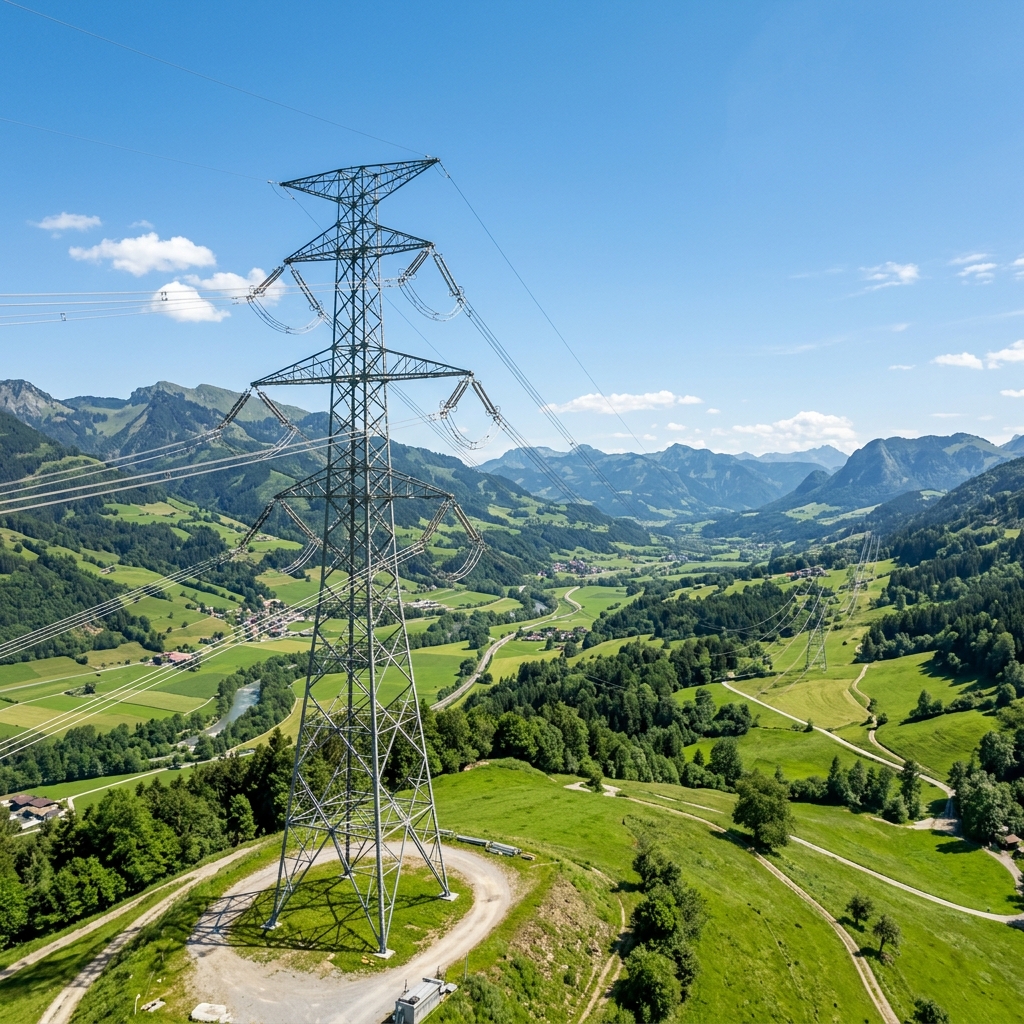
Electrical transmission towers are critical structures in power networks. They support overhead conductors, insulators, earth wires and associated electrical hardware while maintaining the required mechanical clearances and structural stability.
Most transmission towers operate outdoors and remain exposed to wind, rain, humidity, pollution, temperature changes and other environmental conditions. Over time, these factors can contribute to corrosion, damaged steel members, loose or missing fasteners, deformation and foundation-related deterioration.
Drone tower inspection uses unmanned aerial vehicles (UAVs) equipped with high-resolution cameras and, where required, photogrammetry or LiDAR sensors to examine the visible condition of transmission towers.
Aerial inspection allows teams to capture detailed images of tower components from different viewpoints. These images help identify visible structural abnormalities, document corrosion, locate missing hardware and create records for engineering assessment and maintenance planning.
This guide explains how drone tower inspection works, which structural defects can be identified, how aerial mapping supports tower condition assessment and where additional engineering inspections are necessary.
Looking for a tower inspection partner? Explore Agmay's drone electrical inspection services for high-resolution tower imaging, photogrammetry, LiDAR mapping and structured defect reporting.
What Is Drone Tower Inspection?
Drone tower inspection is the use of UAV-mounted imaging and surveying equipment to examine the visible condition of electrical transmission towers and their associated components.
Transmission towers contain many individual structural elements, including:
- Main legs and structural members
- Crossarms
- Diagonal and horizontal bracing
- Steel plates and connection joints
- Bolts, nuts and fasteners
- Tower peaks and earth-wire supports
- Insulator attachment points
- Climbing and safety hardware
- Foundations and base connections
Inspecting these components manually can require significant access planning, climbing operations or specialised equipment.
A drone can capture images from suitable aerial positions, providing inspection teams with a visual record of accessible tower components.
Depending on the inspection objective and equipment, the collected data may include:
- High-resolution photographs
- Close-up images of structural joints
- Images of bolts, nuts and connection plates
- Corrosion and coating-condition photographs
- Video footage of tower structures
- Geotagged inspection records
- Photogrammetric imagery for 3D reconstruction
- LiDAR data for suitable structural mapping applications
The purpose is to identify visible conditions that may require engineering review, not to replace every form of structural assessment.
Why Is Transmission Tower Inspection Important?
Transmission towers are designed to withstand mechanical and environmental loads throughout their operating life. However, their condition can change due to corrosion, fatigue, accidental damage, extreme weather and other deterioration mechanisms.
If structural defects remain undetected, they may affect the strength or reliability of individual components and connections.
Regular inspection helps utilities and asset owners:
- Identify visible corrosion and coating deterioration
- Locate damaged or deformed structural members
- Document missing or displaced fasteners
- Examine tower joints and connection plates
- Record damage after severe weather events
- Monitor changes in structural condition
- Plan detailed inspections and maintenance
- Maintain consistent asset condition records
The inspection programme should consider the tower's design, age, environment, service history and operational importance.
Main Components of an Electrical Transmission Tower
Understanding tower construction helps inspection teams identify which components require attention.
1. Main Tower Legs
The main legs are primary structural members that transfer loads through the tower structure towards the foundation.
Drone imagery can help document visible corrosion, deformation, coating damage and other abnormalities on accessible sections.
2. Crossarms
Crossarms extend from the tower body and support insulator assemblies and conductors.
They contain structural members, joints and connection hardware that may require close visual inspection.
Potential observations include corrosion, damaged members, displaced fittings and visible connection abnormalities.
3. Diagonal and Horizontal Bracing
Bracing members help maintain the structural geometry and stability of lattice towers.
Inspection teams can examine these elements for:
- Bent or deformed steel members
- Corrosion
- Cracks or visible damage
- Missing structural components
- Damaged connection points
- Loose or missing fasteners
A structural engineer should assess the significance of suspected damage.
4. Connection Plates and Joints
Tower members are connected through plates, bolts and other fastening arrangements.
These connection points are important because they transfer forces between structural members.
Drone close-up photographs can help document corrosion, missing bolts, damaged plates and visible joint abnormalities.
5. Tower Peak and Earth-Wire Supports
The upper sections of transmission towers support earth wires and related hardware.
These areas may be difficult to inspect from the ground because of their height and structural arrangement.
Aerial imagery can help document the visible condition of the tower peak, support fittings and associated components.
6. Base Plates and Foundation Interface
The lower tower structure transfers loads into the foundation through its base connections.
Drone photographs can document visible above-ground conditions, such as corrosion around exposed base components and visible concrete damage.
However, drones cannot directly assess buried steel, underground foundation conditions or hidden corrosion. These require appropriate ground-level inspection and, where necessary, specialised testing.
Common Transmission Tower Defects That Drones Can Help Identify
High-resolution aerial imagery can support the identification and documentation of several visible structural defects.
1. Steel Tower Corrosion
Corrosion is one of the important deterioration concerns for steel transmission towers.
Galvanised and painted steel structures can experience coating degradation and corrosion due to environmental exposure, damage to protective layers and ageing.
Drone imagery can help identify:
- Visible rust patches
- Corrosion around bolts and joints
- Deterioration of protective coatings
- Surface corrosion on structural members
- Corrosion around crossarms and connection plates
- Localised deterioration near exposed tower sections
Corrosion severity cannot always be determined from colour or appearance alone. Surface preparation, coating condition, remaining material thickness and structural significance may require closer inspection or measurement.
2. Missing or Loose Bolts
Bolts and nuts are essential fastening components in many lattice tower structures.
Missing or displaced fasteners can affect the intended connection arrangement and may require prompt engineering attention.
Drone photographs can help identify:
- Missing visible bolts
- Missing nuts
- Displaced fasteners
- Corrosion around bolt heads
- Damaged connection arrangements
- Visible gaps or abnormalities at joints
A photograph cannot reliably establish bolt preload or tightening torque. Suspected loose fasteners should be verified using an appropriate ground-based or physical inspection procedure.
3. Bent or Deformed Structural Members
Structural members can become deformed due to mechanical loading, impact, installation problems or other events.
Drone inspection can capture visible bends, distortions and changes in member alignment.
Particular attention may be given to main legs, crossarms, diagonal bracing and other load-bearing components.
The structural significance of a deformation depends on its location, dimensions, member function and loading conditions. Engineering assessment may be required before deciding on repairs.
4. Cracks and Visible Structural Damage
Cracks or visible damage may develop in steel members, connection plates or other structural elements.
High-resolution images can help document suspected defects where they are visible and accessible to the camera.
However, small cracks may be difficult to identify through aerial imagery. Close-range non-destructive testing, such as appropriate magnetic particle or ultrasonic testing, may be required to confirm suspected cracking.
5. Damaged or Missing Bracing
Bracing members contribute to the structural stability of lattice towers.
Drone imagery can help identify visibly missing, damaged, bent or displaced bracing components.
The inspection should consider the complete structural arrangement rather than assessing an isolated member without understanding its role.
6. Damage to Protective Coatings
Galvanising and protective paint systems help reduce corrosion exposure.
Damage can occur due to weathering, abrasion, mechanical impact or ageing.
Drone photographs can document:
- Peeling paint
- Damaged coating areas
- Exposed metal surfaces
- Rust developing around coating damage
- Deteriorated protective finishes
The inspection record can help maintenance teams identify areas for closer coating assessment and repair planning.
7. Tower Misalignment and Visible Deformation
Changes in tower alignment or geometry may be associated with foundation movement, structural damage or other loading conditions.
Aerial imagery can document visible changes, but precise measurements of tower verticality, twist or displacement require suitable surveying methods and reference information.
Photogrammetry or other survey techniques may support geometric assessment when the data collection and processing are properly controlled.
8. Lightning and Weather-Related Damage
Severe weather and lightning events can affect tower structures and associated electrical hardware.
Drone inspection can help document visible conditions such as:
- Damaged or displaced fittings
- Bent structural members
- Visible impact damage
- Damaged earth-wire supports
- Dislodged components
- Other external abnormalities
An aerial inspection after a severe weather event can provide useful visual records, but the need for detailed structural and electrical assessment should be determined by the asset owner.
How Does Drone Tower Inspection Work?
A structured inspection process helps produce useful and consistent inspection records.
Step 1: Tower Identification and Inspection Planning
The inspection team identifies the towers to be examined and defines the required coverage.
Planning considers:
- Tower identification numbers
- Transmission line route
- Tower type and configuration
- Required inspection detail
- Known defect history
- Environmental conditions
- Site access restrictions
- Aviation and electrical safety requirements
The inspection plan should identify the tower components and areas that need detailed imagery.
Step 2: Drone and Camera Selection
The drone platform and imaging equipment should be selected according to the tower height, component size, inspection distance and required image quality.
Important considerations include:
- Camera resolution
- Optical zoom
- Image stabilisation
- Lens characteristics
- Flight endurance
- Platform positioning capability
- Image recording format
- Suitable photogrammetry or LiDAR capability, where required
Small bolts, cracks and connection details require sufficient image resolution. A distant image may show the tower's overall condition but may not provide enough detail for component-level assessment.
Step 3: Aerial Data Acquisition
The drone captures images of the tower from planned viewpoints.
Inspection coverage may include:
- Main legs
- Crossarms
- Tower peak
- Bracing members
- Connection plates
- Bolts and nuts
- Earth-wire supports
- Insulator attachment areas
- Exposed base connections
Multiple viewing angles help provide better visual coverage and reduce blind spots.
Step 4: Image Review and Defect Identification
The captured images are reviewed to identify visible abnormalities.
The inspection team may examine the photographs for corrosion, damaged structural members, missing fasteners, coating deterioration and other observable conditions.
Important observations should be supported by clear images and a reference to the relevant tower component.
Step 5: Photogrammetry and 3D Reconstruction, Where Required
For suitable projects, overlapping drone photographs can be processed to create a three-dimensional representation of the tower.
Photogrammetry can support:
- Structural visualisation
- Component-level image documentation
- Geometric comparison
- Measurement of suitable visible features
- Mapping of selected defect locations
The accuracy of the resulting model depends on image quality, camera calibration, image overlap, control information and processing methods.
A visually detailed 3D model should not automatically be treated as a certified structural survey.
Step 6: Asset Mapping and Defect Documentation
Inspection findings can be linked to tower identifiers, component references and geographic coordinates.
This allows maintenance teams to identify where each observation was recorded and compare findings across future inspections.
Step 7: Reporting and Engineering Review
The inspection report organises the images, observations and asset information.
Suspected structural defects should be reviewed by appropriately qualified personnel to determine their significance and required follow-up actions.
Using Photogrammetry for Transmission Tower Inspection
Photogrammetry is a surveying technique that uses overlapping photographs captured from different positions to reconstruct the geometry of an object or scene.
When applied to suitable transmission tower inspection projects, photogrammetry can provide a three-dimensional representation of visible tower surfaces and components.
How Tower Photogrammetry Works
- The inspection team plans suitable image coverage around the tower.
- The drone captures overlapping photographs from different viewpoints.
- The photographs are processed using photogrammetry software.
- The software identifies corresponding features across images.
- A 3D model or point cloud is generated.
- The resulting data is reviewed for visualisation and suitable measurement tasks.
Potential Applications
Photogrammetry may support:
- Tower geometry documentation
- Visual assessment of structural members
- Mapping of visible corrosion areas
- Comparison of structural appearance across inspections
- Measurement of suitable visible features
- Digital asset documentation
Metric accuracy requires an appropriate survey workflow, calibration and reference control. Measurements taken from an uncontrolled 3D model should not be assumed to meet engineering survey requirements.
LiDAR for Transmission Tower Inspection
Light Detection and Ranging (LiDAR) uses laser measurements to collect three-dimensional spatial information.
A LiDAR-equipped aerial platform can capture point clouds representing the geometry of visible tower structures and surrounding features.
Depending on the sensor, platform and survey design, LiDAR data may support:
- Three-dimensional tower mapping
- Structural geometry documentation
- Spatial relationship analysis
- Corridor mapping
- Vegetation and surrounding terrain assessment
- Digital asset modelling
LiDAR and photogrammetry provide different types of information and may complement one another.
Photogrammetry can provide detailed visual textures and colour information, while LiDAR can provide direct range measurements and point-cloud geometry.
Neither technique independently establishes the internal condition, material strength or load capacity of a tower.
AI-Based Transmission Tower Defect Detection
Artificial intelligence and computer vision can help analyse large collections of tower inspection images.
Image-analysis models can be trained to recognise structural components and identify selected visible defects.
Potential applications include:
- Corrosion detection
- Missing-bolt identification
- Structural member recognition
- Deformation screening
- Component classification
- Insulator and hardware recognition
- Defect image classification
A typical AI-assisted inspection workflow involves:
- Capturing high-resolution drone images.
- Identifying towers and their structural components.
- Detecting potential defects using computer vision.
- Grouping observations by tower and component.
- Reviewing flagged images through human inspection.
- Preparing structured defect records.
Research published in 2025 demonstrated UAV photogrammetry and deep-learning methods for quantifying corroded areas on steel transmission towers using field photographs.
Research published in 2024 also reviewed UAV-image-based detection of overhead line bolt defects, including missing and loose bolts.
These developments show the potential of automated defect screening. Detection performance depends on the training data, image quality, defect size, environmental conditions and validation process. AI-generated findings should be verified before they are used for engineering or maintenance decisions.
Drone Tower Inspection vs Traditional Tower Inspection
Drone inspection and conventional tower inspection serve complementary purposes.
| Inspection factor | Drone inspection | Traditional inspection |
|---|---|---|
| Elevated structural access | Aerial imagery can provide suitable viewpoints | May require climbing or elevated access |
| Visual documentation | High-resolution digital photographs and video | Depends on inspection method and equipment |
| Corrosion screening | Can document visible surface corrosion | Can support closer examination and physical assessment |
| Bolt inspection | Can identify visibly missing or damaged fasteners | Can verify tightening condition using appropriate procedures |
| Structural geometry | Photogrammetry or LiDAR may support measurement | Survey equipment can provide controlled measurements |
| Internal material condition | Cannot establish hidden defects from ordinary imagery | Requires suitable testing methods |
| Foundation assessment | Can document visible above-ground conditions | Ground inspection and specialised methods may be necessary |
| Historical comparison | Digital images and models support comparison | Depends on consistent historical inspection records |
Drone inspection can improve access to visual information, but it does not replace physical verification, non-destructive testing or structural engineering assessment when these are required.
Benefits of Drone-Based Tower Inspection
1. Improved Access to Elevated Structures
Transmission towers contain many components at significant heights. A drone can capture images from suitable aerial positions without requiring personnel to climb every structure for routine visual documentation.
2. Detailed Visual Documentation
High-resolution images can provide a useful record of tower condition, including visible corrosion, structural damage and missing hardware.
3. Inspection of Difficult Terrain
Transmission towers are often located across agricultural land, hills, forests and other challenging environments. Aerial inspection can support data collection where ground access is difficult, subject to flight and site restrictions.
4. Digital Asset Records
Images, geographic coordinates and tower references can be organised into structured digital inspection records.
5. Support for Condition-Based Maintenance
Documented observations help asset owners identify towers that may require additional inspection or maintenance.
6. Integration with 3D Mapping
Photogrammetry and LiDAR can support three-dimensional documentation of suitable tower structures and surrounding corridors.
7. Improved Inspection Consistency
A defined image-capture procedure and reporting structure can help inspection teams collect more consistent records across multiple towers and inspection periods.
Limitations of Drone Tower Inspection
Drone imagery provides valuable visual information, but it cannot establish every aspect of structural condition.
Hidden corrosion: Internal or concealed corrosion may not be visible in photographs.
Material thickness: A photograph cannot accurately determine the remaining steel thickness or structural section loss without an appropriate measurement method.
Bolt tightness: Visible bolt condition does not establish tightening torque or preload.
Small cracks: Fine cracks may not be identifiable at the available image resolution and inspection distance.
Foundation condition: Buried foundation components and subsurface deterioration require ground-based inspection and appropriate testing.
Structural capacity: Drone images cannot independently establish tower load capacity, structural stability or remaining service life.
Obstructed views: Tower geometry, conductors and attached hardware may hide parts of the structure.
Where significant defects are suspected, additional close-range inspection, dimensional measurement, non-destructive testing or structural engineering analysis may be necessary.
What Should a Drone Tower Inspection Report Include?
A useful tower inspection report should connect every observation to a specific structure and component.
| Report element | Information to record |
|---|---|
| Tower identification | Tower number, line section and location |
| Tower details | Structure type and configuration, where known |
| Inspection information | Date, time and inspection coverage |
| Structural components | Main legs, crossarms, bracing, joints and fittings |
| Image evidence | Overview and close-up photographs |
| Defect description | Corrosion, deformation, missing hardware or other observations |
| Defect location | Component reference and position on the tower |
| Mapping data | Coordinates, photogrammetry or LiDAR information where available |
| Follow-up recommendation | Further inspection, testing or maintenance review |
| Historical comparison | Previous observations, where available |
A consistent report structure helps engineers review findings, track deterioration and plan future inspections.
How Often Should Transmission Towers Be Inspected?
There is no single inspection frequency that is suitable for every transmission tower.
Inspection schedules depend on:
- Tower design and age
- Structural condition
- Environmental exposure
- Corrosion risk
- Wind and weather exposure
- Historical damage and defect records
- Network criticality
- Applicable regulatory requirements
- The transmission licensee's maintenance programme
Towers located in coastal, industrial, highly polluted or otherwise corrosive environments may require closer monitoring.
Additional inspections may also be appropriate after severe weather, suspected structural damage or other significant events.
In India, the Central Electricity Authority's Grid Standards Regulations address overhead-line patrolling and maintenance scheduling by transmission licensees. The applicable consolidated regulations and current amendments should be checked when establishing an inspection programme. Drone imagery can support inspection activities, but it should not be assumed to replace required ground patrols, tower-top inspections or other prescribed procedures.
Drone Tower Inspection Services by Agmay Technologies
Agmay Technologies provides drone-based electrical inspection solutions incorporating high-resolution optical imaging, photogrammetry, LiDAR mapping and AI-assisted defect analysis.
Our inspection capabilities support the condition monitoring of transmission towers, structural members, fasteners and associated hardware.
Our approach includes:
- Mission planning with appropriate imaging requirements for tower structures and components
- High-resolution aerial data acquisition using suitable UAV platforms and optical zoom cameras
- Photogrammetry and LiDAR mapping where 3D documentation is required
- AI-assisted defect classification to support engineering review
- Geotagged asset records and structured inspection reporting
Agmay focuses on delivering actionable visual inspection information to support electrical asset condition monitoring and maintenance planning.
Looking for drone tower inspection services?
Whether you manage transmission towers, lattice structures or power infrastructure assets, our aerial inspection can provide valuable condition information about structural components and hardware.
Explore Electrical Inspection Services ↗You can also read our guides on drone electrical inspection, drone transmission line inspection and drone conductor inspection.
Frequently Asked Questions
What is drone tower inspection?
Drone tower inspection uses UAV-mounted cameras and surveying equipment to examine the visible condition of electrical transmission towers. It can help identify corrosion, damaged structural members, missing fasteners and other visible abnormalities.
Can drones detect corrosion on transmission towers?
Yes. High-resolution drone photographs can document visible corrosion, rust patches and protective coating deterioration. Determining corrosion depth, remaining steel thickness and structural significance may require additional inspection or measurement.
Can drones detect missing bolts on transmission towers?
Drone imagery can help identify visibly missing or displaced bolts when the image resolution and viewing angle are suitable. It cannot independently verify bolt torque or preload.
Can drones inspect tower foundations?
Drones can document visible above-ground foundation conditions, such as exposed concrete damage or corrosion around accessible base components. They cannot directly assess buried foundations or subsurface deterioration.
Can drones create 3D models of transmission towers?
Yes. Photogrammetry can process overlapping photographs into three-dimensional models of suitable tower structures. LiDAR can also collect point-cloud data for spatial documentation and mapping.
Can AI detect transmission tower defects?
AI models can be trained to identify selected visible defects, including corrosion and missing fasteners. Their reliability depends on image quality, training data and field validation. Engineering review remains important.
Can drones inspect transmission towers after storms?
Drone imagery can help document visible external damage following severe weather, subject to safe operating conditions and permissions. Structural assessment may still require ground-based inspection or specialist testing.
Does drone tower inspection replace climbing inspections?
No. Drone inspection can reduce the need for some visual access operations, but close physical examination and specialised testing may still be required for suspected structural defects.
Which camera is suitable for transmission tower inspection?
A high-resolution camera with suitable optical zoom and image stabilisation is useful for documenting structural components. Photogrammetry or LiDAR equipment may be appropriate when the project requires three-dimensional mapping or measurement.
Why is regular transmission tower inspection important?
Regular inspection helps identify visible structural deterioration, corrosion, damaged members and missing hardware. It supports condition monitoring, engineering review and maintenance planning for electrical transmission infrastructure.
Conclusion
Transmission towers are essential structural assets in electrical power networks. Their condition can deteriorate due to corrosion, environmental exposure, mechanical loading, vibration and other operating conditions.
Drone tower inspection provides an aerial approach to documenting the visible condition of steel tower structures, including main legs, crossarms, bracing members, joints, bolts and associated hardware.
When combined with high-resolution imaging, photogrammetry, LiDAR, AI-assisted defect screening and structured reporting, drone inspection can support more informed tower condition monitoring and maintenance planning.
However, visual inspection should be treated as one part of a complete structural assessment programme. Suspected critical defects may require physical verification, non-destructive testing, dimensional measurement or detailed engineering analysis.
Agmay Technologies delivers drone-based tower inspection, structural imaging and geospatial reporting solutions to support modern power infrastructure management. Explore Agmay Electrical Inspection Services.