
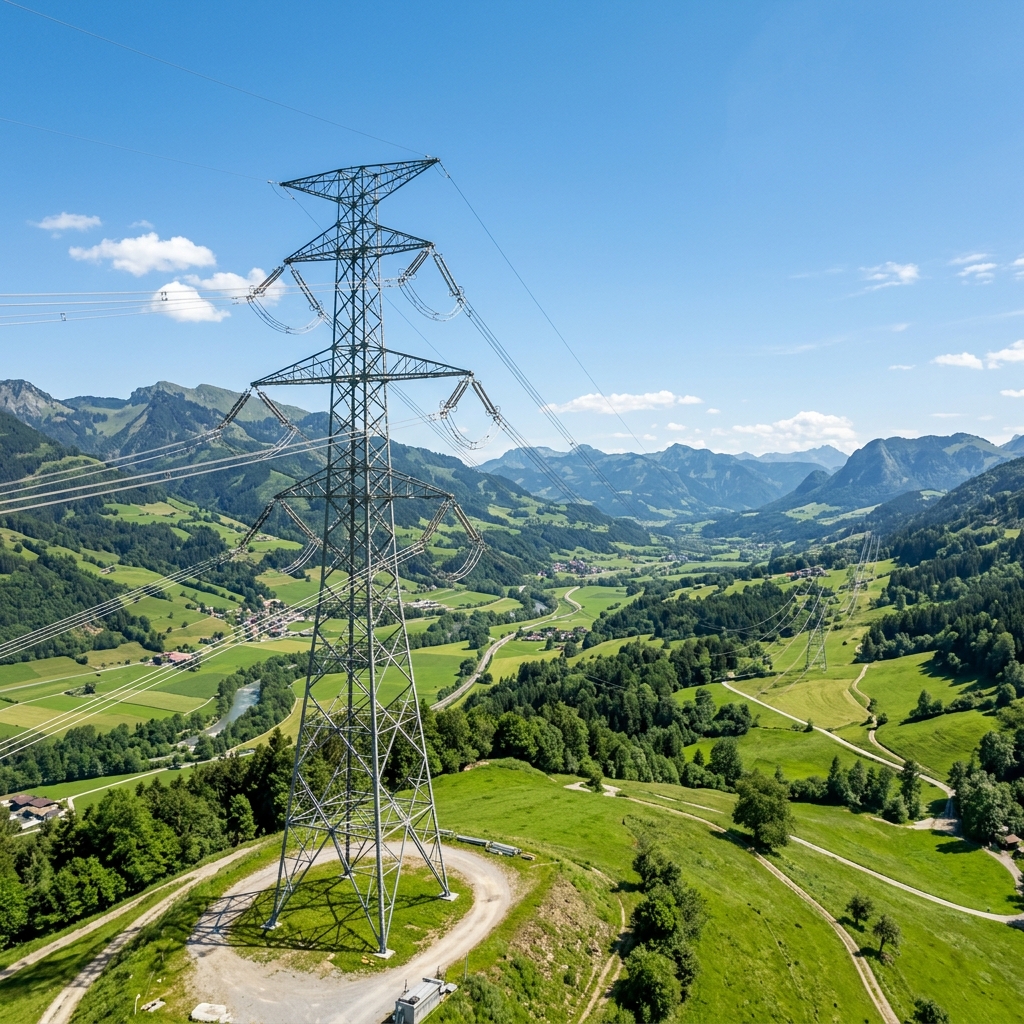
Electrical insulators are essential components of overhead power transmission and distribution networks. They support conductors, provide electrical insulation and help maintain the required separation between energised components and grounded structures.
Exposure to electrical stress, weather, pollution, mechanical forces and ageing can gradually affect their condition. Cracked insulator units, damaged sheds, contamination, corrosion and missing components can create maintenance concerns that require investigation.
Drone insulator inspection uses unmanned aerial vehicles (UAVs) equipped with high-resolution cameras to capture detailed images of insulators installed on power lines and electrical structures. These images help inspection teams examine visible defects, document asset condition and identify components that may need further assessment.
By capturing imagery from different viewing angles, drone inspections can support the condition monitoring of transmission and distribution insulators without relying exclusively on ground-based observations.
This guide explains how drone insulator inspection works, the defects that can be identified, the differences between porcelain, glass and composite insulators, and how aerial inspection data supports electrical asset maintenance.
Looking for an insulator inspection partner? Explore Agmay's drone electrical inspection services for high-resolution insulator imaging, defect documentation and GIS-based asset records.
What Is Drone Insulator Inspection?
Drone insulator inspection is the use of an aerial platform equipped with optical imaging equipment to examine the visible condition of electrical insulators.
Insulators are commonly installed on transmission towers, distribution poles, substations and other electrical structures. Their elevated positions and proximity to energised equipment can make conventional inspection difficult.
A drone can capture high-resolution images of these components from suitable positions, allowing engineers to examine details that may not be visible from the ground.
Depending on the camera and inspection requirements, the collected data may include:
- High-resolution photographs of insulator strings
- Close-up images of individual insulator units
- Images of insulator fittings and connections
- Photographs of visible cracks, chips and breakage
- Records of contamination and surface deterioration
- Geotagged inspection images
- Video footage of selected electrical structures
The resulting imagery can be reviewed manually or processed using computer vision tools to support defect identification and asset documentation.
Why Are Electrical Insulators Important?
Electrical insulators perform two important functions in overhead electrical networks.
Mechanical support: They support conductors and help maintain the required physical clearance between electrical components and supporting structures.
Electrical insulation: They resist the flow of electrical current between energised conductors and grounded structures under their intended operating conditions.
A damaged or deteriorated insulator can affect the reliability of the electrical installation. Depending on the defect, operating conditions and equipment design, it may contribute to insulation failure, flashover risk, mechanical weakness or an increased likelihood of an unplanned outage.
Regular condition monitoring helps utilities identify visible deterioration and determine whether additional testing or maintenance is necessary.
Types of Electrical Insulators Inspected Using Drones
Different insulator materials have different physical characteristics. Inspection methods should account for these differences when examining their condition.
1. Porcelain Insulators
Porcelain insulators are widely used in electrical transmission and distribution systems. They typically consist of ceramic insulating bodies with a glazed external surface.
Drone imagery can help identify visible conditions such as:
- Cracks in porcelain bodies
- Chipped or broken sections
- Surface contamination
- Damaged or deteriorated glaze
- Visible mechanical damage
- Corrosion around associated metal fittings
Cracks are particularly important to document because visible damage may indicate a need for closer examination.
However, an image cannot establish the complete internal condition or electrical performance of a porcelain insulator. Further assessment may be required.
2. Glass Insulators
Glass insulators are commonly used in disc-type suspension and tension strings.
Their transparent or translucent appearance can provide useful visual indications of certain forms of physical damage. Depending on the insulator design, a failed or shattered glass unit may be visually distinguishable from intact units.
Drone inspection can help identify:
- Broken or shattered glass discs
- Missing insulator units
- Visible damage to disc edges
- Contamination deposits
- Damaged fittings and connections
- Irregularities in the insulator string
The inspection team should examine the complete string rather than relying on a single photograph. Viewing angle, background and lighting can affect the visibility of individual units.
3. Composite or Polymer Insulators
Composite insulators typically use a fibreglass-reinforced insulating core with a polymer housing and external sheds.
They are used in various transmission and distribution applications.
Drone-based visual inspection can help identify:
- Damaged or missing sheds
- Visible cuts or tears in the housing
- Surface erosion
- Deformation
- Contamination deposits
- Damage around end fittings
- Visible deterioration of external surfaces
Not every internal defect is visible externally. Internal core damage, moisture ingress and certain forms of interface deterioration may require specialised diagnostic methods.
Common Insulator Defects That Drones Can Help Identify
High-resolution drone imagery can support the identification and documentation of several visible insulator defects.
1. Cracked Insulators
Cracks can develop due to mechanical stress, impact, ageing or other deterioration mechanisms.
Depending on their size, location and appearance, cracks may be visible in close-range photographs.
Inspection teams can capture multiple viewing angles to document suspicious areas and help engineers determine whether additional investigation is needed.
2. Broken or Missing Insulator Units
Disc insulator strings may contain multiple individual units. Physical damage or missing units can affect the intended mechanical and electrical arrangement.
Drone imagery can help identify:
- Missing discs
- Broken units
- Shattered glass
- Damaged porcelain sections
- Irregularities in the string arrangement
Comparing the captured images with the expected string configuration can help identify components requiring further examination.
3. Surface Contamination
Insulators operating in polluted environments may accumulate dust, salt, industrial deposits and other contaminants.
Contamination can influence surface electrical performance, particularly when combined with moisture.
Drone photographs can document visible contamination and help maintenance teams identify assets requiring closer assessment or cleaning.
However, visible imagery cannot reliably determine the electrical severity of contamination or establish whether an insulator will experience flashover under particular operating conditions.
4. Damaged Insulator Sheds
Composite insulators use external sheds to help maintain suitable insulation performance under environmental exposure.
Damage may include:
- Torn or missing shed sections
- Cuts in the polymer housing
- Deformation
- Surface erosion
- Visible mechanical damage
Drone inspection can document these conditions and provide location-specific imagery for maintenance teams.
5. Corrosion of Metal Fittings
Insulator assemblies include metal fittings, end connections and supporting hardware.
Corrosion may develop due to moisture, pollution and environmental exposure.
High-resolution photographs can help identify visible corrosion, deterioration and possible mechanical damage around these components.
6. Flashover Marks and Surface Tracking
Electrical discharge activity may leave visible evidence on insulator surfaces.
Possible visual observations include:
- Discolouration
- Burn marks
- Surface tracking
- Erosion
- Localised damage
Such observations should be documented carefully. A photograph alone may not establish the cause, electrical history or remaining insulation performance of the component.
7. Damaged or Missing Hardware
Insulator assemblies depend on associated fittings and hardware for mechanical support and connection.
Drone imagery can help identify visible conditions such as:
- Missing pins or retaining components
- Damaged connection hardware
- Corrosion
- Displaced fittings
- Deformed metal components
These observations can be important because an insulator assembly must be assessed as a complete mechanical arrangement, not simply as an insulating body.
How Does Drone Insulator Inspection Work?
A structured inspection process helps ensure that the captured images are useful for engineering review and maintenance decisions.
Step 1: Inspection Planning
The inspection begins with identifying the electrical structures and insulator assemblies that need to be examined.
The inspection team considers:
- Transmission or distribution line layout
- Tower and pole locations
- Insulator type and configuration
- Required image resolution
- Site access and flight restrictions
- Electrical safety requirements
- Weather and visibility conditions
- Required inspection deliverables
The objective is to capture sufficient detail of the relevant insulator assemblies while following applicable operating and safety procedures.
Step 2: Drone and Camera Selection
The drone and camera should be suitable for the inspection distance, component size and required image detail.
Important considerations include:
- Camera sensor resolution
- Optical zoom capability
- Image stabilisation
- Lens characteristics
- Low-light performance
- Image recording quality
- Flight endurance
- Platform stability
Optical zoom can be useful for inspecting small features while maintaining a suitable stand-off distance. Digital enlargement does not create additional original image detail.
Step 3: Aerial Image Acquisition
The drone captures photographs and video of the selected insulator assemblies.
The inspection may include views of:
- Complete insulator strings
- Individual insulator discs
- Insulator-to-tower connections
- Conductor-side fittings
- Crossarm-side fittings
- Visible contamination and damaged surfaces
Multiple viewing angles can help reduce blind spots and provide better context for subsequent image review.
Step 4: Image Review and Defect Identification
The captured images are examined to identify visible abnormalities.
The review may focus on cracks, broken units, contamination, missing hardware, damaged sheds and other observable conditions.
Potential defects should be recorded with enough visual context to identify the relevant component and its position on the structure.
Step 5: Asset Identification and Location Mapping
Inspection findings can be associated with the relevant tower, pole or electrical asset.
Geotagging and structured asset references help maintenance teams locate the inspected component and compare its condition during future inspections.
Step 6: Inspection Reporting
The final report can include:
- Asset identification
- Insulator type
- Inspection date
- High-resolution photographs
- Identified visible defects
- Defect location and description
- Supporting image references
- Recommended follow-up actions
The report gives engineers and asset managers an organised record of the inspection.
AI-Based Insulator Defect Detection Using Drone Images
Artificial intelligence and computer vision can support the analysis of large collections of drone inspection images.
A computer vision system can be trained to recognise insulator assemblies and identify selected visual defect categories.
A typical AI-assisted workflow includes:
- Insulator detection: Locating insulator strings and individual units within aerial images.
- Image segmentation: Separating the insulator from surrounding tower structures, conductors and background objects.
- Defect identification: Analysing image regions for visible damage or missing components.
- Classification: Assigning detected observations to predefined categories.
- Human review: Having an inspection specialist validate important findings.
- Reporting: Associating confirmed observations with asset records and inspection locations.
Research published in Drones in 2024 proposed a lightweight deep-learning model for identifying insulator defects from drone images. Other research has examined missing-insulator detection using UAV imagery and image segmentation techniques.
These studies demonstrate the potential of computer vision for inspection support. Their reported model performance applies to their particular datasets and experimental conditions; it should not be treated as a guarantee of accuracy for every utility network or field deployment.
AI should support engineering review rather than independently determine the electrical safety or serviceability of an insulator.
Drone Insulator Inspection vs Traditional Inspection
Both drone-based and conventional inspection methods have roles in electrical asset management.
| Inspection factor | Drone inspection | Traditional inspection |
|---|---|---|
| Elevated asset access | Aerial imaging can provide access to suitable viewing positions | May require ground-based observation or elevated access |
| Image documentation | High-resolution digital photographs and video | Depends on the inspection equipment and method |
| Inspection coverage | Can support inspections across distributed structures | May require more movement between inspection locations |
| Close visual examination | Depends on camera resolution and viewing distance | Can support direct close-range examination where safe access exists |
| Repeat inspections | Images can be compared across inspection periods | Depends on the availability of consistent historical records |
| Internal defect assessment | Cannot establish all internal conditions from imagery | May require physical or specialised diagnostic testing |
| Electrical performance assessment | Visual imagery alone is insufficient | Requires appropriate electrical testing where necessary |
Drone inspection does not eliminate the need for specialised testing or physical examination when a suspected defect requires confirmation.
Benefits of Drone-Based Insulator Inspection
Improved Access to Elevated Components
Insulators are installed at considerable heights on transmission towers and distribution structures. Drones can capture imagery from suitable aerial positions without requiring personnel to physically access every inspected component.
Detailed Visual Documentation
High-resolution imagery provides a record of visible insulator condition. This can help engineers review defects and compare observations across different inspection periods.
Inspection of Distributed Networks
Drone operations can support the inspection of insulators across geographically distributed electrical infrastructure, subject to flight permissions, site conditions and operational constraints.
Better Maintenance Planning
Structured defect records help maintenance teams identify components that may require additional assessment, repair or replacement.
Integration with Digital Asset Records
Geotagged photographs and inspection reports can be organised with GIS and asset-management systems to support long-term condition monitoring.
Limitations of Drone Insulator Inspection
Drone imagery is valuable for visual condition assessment, but it has important limitations.
Internal defects: A visible photograph cannot reveal every internal defect in porcelain, glass or composite insulators.
Electrical performance: Visual inspection cannot independently establish insulation resistance, dielectric strength or complete electrical condition.
Viewing angle: Certain defects may be hidden by the tower structure, conductor arrangement or other components.
Image resolution: Small cracks and fine surface defects may not be identifiable if the target occupies too few pixels.
Environmental conditions: Lighting, shadows, weather and background complexity can affect image quality.
Contamination severity: A photograph can document visible deposits but cannot independently establish their electrical impact.
Flight restrictions: Electrical sites may have specific aviation, access and operational safety requirements.
Where a suspected defect could affect asset reliability, the asset owner should determine whether additional testing or physical inspection is required.
What Should a Drone Insulator Inspection Report Include?
A useful report should connect each observation to a clearly identifiable asset and provide sufficient evidence for engineering review.
| Report element | Information to record |
|---|---|
| Asset identification | Tower, pole, line section or substation reference |
| Insulator details | Type, configuration and inspected location |
| Inspection information | Date, time and inspection coverage |
| Image evidence | Overview and close-up photographs |
| Defect description | Visible damage or abnormal condition |
| Defect location | Position within the insulator assembly |
| Supporting observations | Related hardware, fittings or surrounding conditions |
| Follow-up recommendation | Further inspection, testing or maintenance review |
| Digital records | Geotagged imagery and asset references, where available |
Consistent reporting makes it easier to compare asset condition and track previously identified defects.
How Often Should Electrical Insulators Be Inspected?
There is no single inspection interval that applies to every insulator or electrical network.
Inspection frequency depends on several factors:
- Voltage level and asset criticality
- Insulator material and design
- Environmental pollution
- Coastal or industrial exposure
- Historical defect records
- Operating conditions
- Utility maintenance policy
- Applicable technical and regulatory requirements
Insulators operating in harsh environmental conditions may require more frequent monitoring than assets in less demanding environments.
Utilities should establish inspection schedules based on asset risk, operating experience and applicable requirements. Suspected damage or abnormal observations may justify additional inspection outside the normal schedule.
Drone Insulator Inspection Services by Agmay Technologies
Agmay Technologies provides drone-based electrical inspection solutions incorporating high-resolution optical imaging, AI-assisted defect analysis and GIS-based reporting.
Our inspection capabilities support the condition monitoring of insulators on transmission towers, distribution poles and substation structures.
Our approach includes:
- Mission planning with appropriate imaging requirements for insulator assemblies
- High-resolution aerial data acquisition using suitable UAV platforms and optical zoom cameras
- Image review and visible defect identification
- AI-assisted classification to support engineering review
- Geotagged asset records and structured inspection reporting
Agmay focuses on delivering actionable visual inspection information to support electrical asset condition monitoring and maintenance planning.
Looking for drone insulator inspection services?
Whether you manage transmission towers, distribution networks or substation infrastructure, our aerial inspection can provide valuable condition information about insulator assemblies.
Explore Electrical Inspection Services ↗You can also read our guides on drone electrical inspection, drone transmission line inspection and drone thermal inspection.
Frequently Asked Questions
What is drone insulator inspection?
Drone insulator inspection is the use of UAV-mounted cameras to capture detailed images of electrical insulators installed on transmission towers, distribution poles and other electrical structures. The imagery supports the identification and documentation of visible defects.
Can drones detect cracks in electrical insulators?
High-resolution drone cameras can capture visible cracks and physical damage when image quality, distance and viewing angle are suitable. Very small, hidden or internal defects may require additional inspection methods.
Can drones inspect porcelain insulators?
Yes. Drone imagery can help examine porcelain insulators for visible cracks, chips, breakage, contamination and damage around associated fittings.
Can drones inspect glass disc insulators?
Yes. Aerial images can help identify broken or missing glass discs, visible damage and irregularities in suspension or tension strings.
Can drones inspect composite insulators?
Yes. Drone cameras can document visible damage to polymer housings, sheds, end fittings and external surfaces. Internal core defects cannot necessarily be identified through external photographs.
Can drone inspection detect contaminated insulators?
Drone imagery can document visible contamination deposits on insulator surfaces. However, it cannot independently determine contamination severity or establish electrical performance under wet or polluted conditions.
Can AI detect insulator defects from drone images?
Computer vision models can be trained to detect insulator strings and classify selected visible defects. Results depend on image quality, training data, defect categories and field conditions. Important findings should be reviewed by qualified inspection personnel.
Does drone insulator inspection replace manual inspection?
No. Drone imagery can support routine visual monitoring and reduce the need for some physical access operations, but specialised testing and close physical examination may still be required.
Which camera is suitable for drone insulator inspection?
A high-resolution camera with suitable optical zoom, image stabilisation and adequate detail at the planned inspection distance is useful. Camera selection should be based on the size of the defects being examined and the required image quality.
Why is regular insulator inspection important?
Regular inspection helps identify visible deterioration, missing components, contamination and other conditions that may require engineering assessment. It supports maintenance planning and the ongoing monitoring of electrical infrastructure.
Conclusion
Electrical insulators play a critical role in maintaining the mechanical and electrical integrity of transmission and distribution networks. Their condition can be affected by environmental exposure, contamination, ageing and mechanical damage.
Drone insulator inspection provides a practical aerial method for capturing detailed visual information about porcelain, glass and composite insulators. It can help identify visible cracks, broken units, damaged sheds, contamination, corrosion and missing hardware.
When combined with structured image analysis, asset identification, GIS mapping and consistent reporting, drone inspection can support more informed electrical asset condition monitoring and maintenance planning.
The most reliable inspection programmes combine high-quality aerial imagery with engineering interpretation and additional diagnostic testing whenever visual evidence alone is insufficient.
Agmay Technologies delivers drone-based insulator inspection, electrical asset monitoring and geospatial reporting solutions to support modern power infrastructure management. Explore Agmay Electrical Inspection Services.