
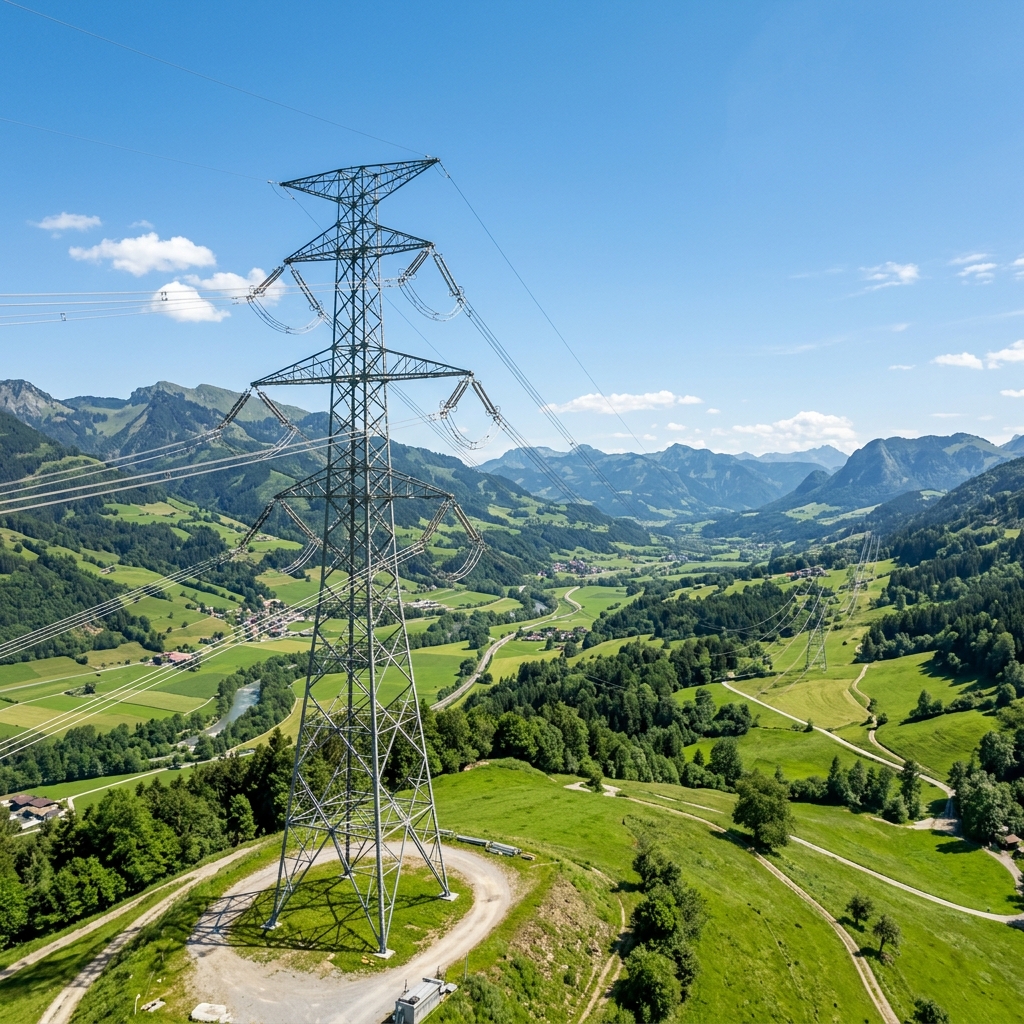
Electrical equipment operates under continuous electrical and environmental stress. Over time, loose connections, overloaded components, deteriorating contacts and equipment degradation can create abnormal temperature patterns that require investigation. Drone thermal inspection uses unmanned aerial vehicles (UAVs) equipped with infrared thermal cameras to identify potential hotspots, assess electrical equipment conditions and support preventive maintenance.
By combining aerial thermal imaging with high-resolution visual cameras and radiometric data analysis, inspection teams can examine selected electrical infrastructure without requiring direct physical access to every inspection point.
Drone-based infrared thermography is increasingly relevant to electricity transmission companies, distribution utilities, substation operators, renewable energy facilities and industrial infrastructure owners.
It can support the inspection of overhead power lines, electrical connectors, transformers, substations, switchgear and other accessible electrical assets.
The real value of thermal inspection is not simply identifying hot areas. It is understanding temperature differences, evaluating possible causes and providing reliable information that helps engineers determine whether further investigation or maintenance is necessary.
Looking for a thermal inspection partner? Explore Agmay's drone electrical inspection services for infrared thermography, radiometric analysis and hotspot detection across power infrastructure.
What Is Drone Thermal Inspection?
Drone thermal inspection is the process of using an unmanned aerial vehicle equipped with an infrared camera to capture thermal information from electrical equipment and infrastructure.
Unlike conventional RGB cameras, which capture visible-light photographs, thermal cameras detect infrared radiation emitted by objects and convert it into thermal images.
These images represent the apparent temperature distribution across the observed surfaces.
When a radiometric thermal camera is used, the captured data can also support temperature-related measurements under suitable calibration and environmental conditions.
Drone thermal inspection can be used to examine:
- Overhead transmission and distribution line connections.
- Electrical connectors and terminals.
- Transmission tower fittings.
- Distribution transformers.
- Substation busbars.
- Circuit breakers and isolators.
- Switchgear connections.
- Cable terminations.
- Electrical equipment enclosures.
- Renewable energy electrical installations.
The inspection findings can help identify abnormal temperature patterns that require further engineering assessment.
How Does Drone Thermal Inspection Work?
A drone thermal inspection combines flight planning, infrared data collection, thermal image processing and engineering interpretation.
1. Inspection Planning and Asset Identification
The inspection begins by identifying the electrical assets and equipment requiring thermal assessment.
The inspection team reviews the infrastructure layout, asset configuration, operating conditions and required thermal coverage.
Planning considerations include:
- Equipment locations and asset identification.
- Voltage levels and electrical configurations.
- Electrical safety clearances.
- Operating load and inspection conditions.
- Required thermal camera resolution.
- Measurement distance.
- Environmental temperature and wind.
- Surface characteristics and emissivity.
- Flight routes and observation angles.
- Airspace restrictions and operational permissions.
The inspection plan should ensure that the selected equipment can be observed at a suitable distance and angle while maintaining the required electrical and aviation safety controls.
2. Drone Deployment and Thermal Data Acquisition
Once the inspection plan is approved, the drone is deployed along the designated route.
The UAV captures infrared images of selected electrical components using its thermal imaging camera.
Depending on the equipment and inspection requirements, the survey may collect:
- Thermal images of electrical connectors.
- Temperature patterns across transmission line fittings.
- Transformer external thermal images.
- Thermal images of substation busbars.
- Switchgear connection temperatures.
- Infrared photographs of cable terminations.
- Thermal observations of selected electrical equipment.
A drone may also capture corresponding RGB photographs to provide visible context for each thermal observation.
Combining thermal and visual imagery is important because thermal anomalies should be associated with the correct physical component before engineering conclusions are made.
3. Radiometric Thermal Imaging
Radiometric thermal imaging provides temperature-related information for individual pixels within a thermal image.
Unlike a conventional thermal image that only displays a colour-based temperature representation, radiometric data allows suitable software to analyse temperature values across selected regions.
Important measurements can include:
- Maximum apparent or calculated surface temperature.
- Minimum temperature.
- Average temperature.
- Background temperature.
- Temperature difference between comparable components.
- Temperature distribution across an observed surface.
For example, when inspecting comparable electrical connections, an engineer may examine whether one connection displays a significantly different temperature pattern from the others.
This comparison can help identify potential abnormalities requiring further investigation.
However, radiometric readings are not automatically equivalent to the actual internal temperature of electrical equipment. Measurement accuracy depends on emissivity, reflected radiation, atmospheric conditions, calibration and observation geometry.
4. Hotspot Identification and Temperature Analysis
A hotspot is an area displaying a higher temperature than its surroundings or comparable equipment under relevant operating conditions.
In electrical infrastructure, abnormal heating may be associated with:
- High electrical resistance at a connection.
- Loose or deteriorating electrical contacts.
- Uneven electrical loading.
- Overloaded components.
- Deteriorating connectors.
- Equipment degradation.
- Inadequate heat dissipation.
Thermal imaging can help identify these patterns before an engineer determines the underlying cause.
An important part of thermal inspection is distinguishing a genuine equipment-related anomaly from environmental effects or measurement artefacts.
For example, reflected sunlight on a metallic surface may create a misleading thermal appearance. A change in viewing angle or a repeat observation may be necessary to verify the finding.
5. RGB and Thermal Image Correlation
Thermal images are more useful when they can be matched with corresponding visible-light photographs.
RGB cameras provide information about the physical appearance of equipment, while infrared cameras provide temperature-related information.
Combining the two datasets helps inspection teams:
- Identify the exact component displaying an anomaly.
- Associate thermal observations with physical equipment.
- Document visible corrosion or damage.
- Compare similar components.
- Prepare annotated inspection records.
- Reduce the risk of misinterpreting thermal reflections.
This combined approach provides a stronger basis for engineering assessment than thermal images alone.
6. Thermal Data Processing and Anomaly Classification
After data acquisition, thermal images are processed using suitable software.
The analysis may involve selecting measurement regions, comparing equipment temperatures and reviewing thermal patterns.
Potential findings can be organised into categories such as:
- Normal thermal behaviour.
- Temperature variation requiring monitoring.
- Potential abnormal heating requiring investigation.
- Significant thermal anomaly requiring priority assessment.
Classification criteria should be established by the utility or inspection organisation using applicable engineering procedures and equipment-specific requirements.
There is no universal temperature threshold that can accurately classify every electrical hotspot.
7. Thermal Inspection Reporting
The final stage involves organising thermal findings into a structured inspection report.
A thermal inspection report may contain:
- Asset identification.
- Inspection date and time.
- Equipment operating conditions.
- Ambient temperature.
- Thermal images.
- Corresponding RGB photographs.
- Measurement regions.
- Recorded temperature values.
- Temperature differentials.
- Potential anomaly descriptions.
- Inspection limitations.
- Recommended follow-up investigations.
These records can support maintenance planning, historical comparisons and condition monitoring.
What Electrical Equipment Can Drones Inspect Using Thermal Imaging?
Drone thermal inspection can support the assessment of several types of electrical infrastructure.
1. Overhead Power Lines
Overhead transmission and distribution networks contain conductors, connectors, clamps, jumpers and other electrical fittings.
Thermal imaging can help identify abnormal temperature patterns in selected components.
Potential inspection targets include:
- Conductor connectors.
- Jumper connections.
- Suspension clamps.
- Tension fittings.
- Electrical terminals.
- Selected conductor joints.
- Associated electrical hardware.
Thermal anomalies in these components may indicate conditions that require further investigation.
2. Electrical Transformers
Transformers operate under electrical loading and generate heat through their normal operation.
Drone-based thermal inspection can capture temperature patterns across accessible external transformer surfaces and connections.
Potential inspection areas include:
- Transformer bushings.
- External electrical connections.
- Radiator surfaces.
- Transformer tank surfaces.
- Cable connections.
- External terminals.
- Cooling equipment.
Thermal observations can help identify abnormal surface temperature patterns.
However, thermal imaging cannot replace transformer diagnostics such as dissolved gas analysis, oil testing, winding resistance measurement or insulation testing.
3. Electrical Substations
Substations contain numerous electrical components that require regular inspection.
Drone thermal imaging can support the examination of selected accessible equipment, including:
- Busbar connections.
- Circuit breaker terminals.
- Isolator contacts and connections.
- Current transformer connections.
- Voltage transformer connections.
- Surge arrester connections.
- Cable terminations.
- Electrical connectors.
The inspection methodology must account for equipment configuration, electrical clearances and the substation's operational safety requirements.
4. Switchgear and Electrical Connections
Electrical switchgear contains switching, protection and control equipment that may develop abnormal temperature patterns under certain operating conditions.
Thermal imaging can help examine accessible external surfaces and connections.
Potential inspection observations include:
- Overheated external terminals.
- Uneven connection temperatures.
- Abnormal heating around accessible components.
- Temperature differences between comparable phases.
Internal switchgear connections and insulated components may not be visible to an external thermal camera. Additional inspection methods may be required.
5. Renewable Energy Electrical Infrastructure
Solar and wind energy facilities contain electrical equipment that requires condition monitoring.
Drone thermal imaging can support inspection of selected electrical installations, including:
- Transformer connections.
- Inverter external surfaces.
- Electrical distribution equipment.
- Power conversion connections.
- Selected switchyard equipment.
- Solar photovoltaic modules.
Solar module thermography has specific requirements relating to irradiance, environmental conditions, module operating state and inspection methodology. It should be treated as a specialised application rather than assumed to follow exactly the same procedure as power line inspection.
Common Electrical Hotspots Detected During Thermal Inspection
The following table describes potential abnormalities that thermal inspection may help identify.
| Electrical component | Potential thermal observation |
|---|---|
| Connectors | Localised abnormal heating |
| Cable terminals | Temperature differences between comparable connections |
| Busbar joints | Uneven temperature distribution |
| Transformer bushings | Abnormal external temperature patterns |
| Circuit breaker connections | Potential contact-related heating |
| Isolator connections | Localised thermal anomalies |
| Overhead conductor fittings | Abnormal temperature patterns |
| Switchgear terminals | Potential overheating |
| Transformer external connections | Temperature differences across connections |
| Electrical cable terminations | Localised thermal anomalies |
These observations are indicators for investigation, not confirmed diagnoses of the underlying defect.
Why Do Electrical Hotspots Occur?
Electrical hotspots can develop for several reasons.
Understanding the possible causes is important when interpreting thermal images.
Loose Electrical Connections
A loose connection can increase electrical resistance at the contact point.
Under suitable operating conditions, this may produce localised heating.
Contact Deterioration
Corrosion, oxidation, surface deterioration and mechanical damage can affect electrical contact quality.
These conditions may contribute to abnormal temperature patterns.
Electrical Overloading
Electrical equipment operating beyond its intended loading conditions may generate excessive heat.
However, a high temperature alone does not establish overloading. Electrical load information and equipment ratings must also be considered.
Uneven Phase Loading
Differences in electrical loading across phases can create temperature variations between comparable components.
Thermal inspection can help identify these differences, but electrical measurements are necessary to establish their cause.
Equipment Deterioration
Ageing, damaged components and deterioration of electrical fittings may affect equipment performance and thermal behaviour.
Thermal imaging can provide additional information for investigating such conditions.
Technologies Used in Drone Thermal Inspection
Selecting the appropriate thermal camera and UAV platform is essential for collecting useful inspection information.
Radiometric Infrared Cameras
Radiometric thermal cameras capture infrared information that can be used to analyse temperature distributions across selected image regions.
They are particularly useful when inspection reports require temperature-related measurements rather than visual thermal images alone.
High-Resolution RGB Cameras
RGB cameras provide visible-light images that help identify equipment, physical defects and the exact location of thermal anomalies.
Optical Zoom Cameras
Optical zoom cameras provide detailed images of selected components from an appropriate stand-off distance.
They can help correlate thermal observations with physical equipment.
Dual-Sensor Thermal Cameras
Dual-sensor systems combine thermal and visible-light imaging within an integrated platform.
This can simplify the collection and correlation of inspection data.
GNSS and RTK Positioning
GNSS and RTK technologies can support geospatial documentation of inspection findings.
Actual positioning performance depends on equipment, correction services, environmental conditions and the inspection environment.
AI-Assisted Thermal Analysis
AI-assisted image processing can help identify temperature anomalies, classify thermal images and organise large inspection datasets.
However, reliable automated thermal diagnosis requires appropriate radiometric data, validated models and engineering review.
Factors That Affect Drone Thermal Inspection Accuracy
Obtaining a thermal image does not automatically mean that the temperature measurement is accurate.
Several technical and environmental factors influence the reliability of infrared inspection.
1. Emissivity
Emissivity describes how effectively a surface emits infrared radiation compared with an ideal blackbody at the same temperature.
Different materials have different emissivity characteristics.
Metallic electrical components often have low emissivity and high reflectivity, which can make thermal measurements challenging.
Incorrect emissivity settings can produce misleading temperature readings.
2. Reflected Apparent Temperature
Thermal cameras can detect infrared radiation reflected from surrounding objects and the environment.
Reflective metal surfaces may display apparent temperatures influenced by nearby equipment, the sky, sunlight or other heat sources.
Measurement procedures should account for reflected radiation where quantitative temperature assessment is required.
3. Electrical Load
Electrical equipment temperature depends partly on its operating load.
A connection operating at low current may not display the same temperature behaviour as it would under higher loading conditions.
Recording the equipment load during inspection can therefore improve the interpretation of thermal findings.
4. Ambient Temperature and Weather
Environmental temperature, wind and humidity can affect thermal observations.
Wind can cool exposed equipment surfaces and potentially reduce the visible temperature difference associated with an anomaly.
Solar radiation can heat external surfaces and create misleading temperature patterns.
5. Camera Resolution and Measurement Distance
Thermal camera resolution determines the number of thermal pixels available to represent the observed equipment.
Small components inspected from excessive distances may occupy too few pixels for reliable temperature assessment.
The inspection distance must therefore be appropriate for the camera's thermal resolution and the size of the target.
6. Viewing Angle
The viewing angle affects the thermal information captured from reflective and geometrically complex surfaces.
Inspection teams should select appropriate observation angles and repeat questionable measurements where necessary.
7. Camera Calibration and Measurement Settings
Thermal cameras require suitable calibration and measurement settings.
Inspection procedures should account for camera calibration, temperature range, focus, measurement distance, atmospheric parameters and other relevant settings.
Drone Thermal Inspection vs Conventional Infrared Inspection
Traditional infrared inspections commonly use handheld thermal cameras or other ground-based equipment.
Drone thermal inspection adds an aerial data collection method.
| Inspection factor | Conventional thermal inspection | Drone thermal inspection |
|---|---|---|
| Equipment access | Depends on ground access | Aerial observation of selected assets |
| Elevated connections | May require elevated access | Can capture thermal images from suitable stand-off distances |
| Power line corridors | Requires separate access along the route | Can survey selected corridor sections |
| Substation equipment | Ground-based thermal imaging | Aerial thermal imaging where authorised |
| Data collection | Handheld thermal photographs | Aerial radiometric image datasets |
| Visual correlation | Separate camera or integrated equipment | Can combine aerial RGB and thermal imagery |
| Geospatial records | Depends on inspection workflow | Can integrate GNSS and GIS information |
| Defect assessment | Engineering interpretation | Engineering interpretation with digital analysis support |
Neither approach is universally better.
Handheld thermal inspection can provide closer views of certain components and may be more appropriate for detailed measurements. Drone inspection is useful where aerial visibility and remote data collection provide operational advantages.
A combined inspection strategy may be appropriate for complex electrical infrastructure.
Can Drones Detect Electrical Faults Before Equipment Failure?
Drone thermal inspection can identify abnormal temperature patterns that may indicate developing electrical problems.
For example, a connection displaying unusual heating compared with similar components may require additional investigation.
Identifying these patterns can help utilities prioritise inspections and maintenance activities.
However, thermal imaging does not predict every electrical failure.
Some defects do not generate detectable surface temperature changes. Others may only become visible under particular operating loads or environmental conditions.
The effectiveness of thermal inspection depends on:
- Suitable camera selection.
- Appropriate inspection conditions.
- Equipment operating load.
- Measurement methodology.
- Correct interpretation of thermal data.
- Historical temperature comparisons.
- Engineering validation.
Thermal inspection should therefore be part of a broader condition-monitoring programme rather than the sole basis for predicting equipment failures.
Drone Thermal Inspection in India
India's electricity infrastructure includes extensive transmission networks, distribution systems, substations, renewable energy installations and industrial electrical facilities.
Thermal inspection is an important condition-monitoring method for identifying hotspots in electrical equipment.
The Central Electricity Authority's regulatory framework includes a specific thermovision scanning provision.
Under Regulation 26 of the CEA (Technical Standards for Construction of Electrical Plants and Electric Lines) Regulations, 2022, thermovision scanning for hotspots on overhead lines and substation equipment at 220 kV and above is required at least once a year, with remedial measures to be taken where hotspots are detected.
This is a requirement concerning thermovision scanning, not a requirement to use drones.
Drone-based thermal imaging can provide an additional method of collecting inspection information where the equipment, operating environment and applicable safety requirements permit.
Indian Drone Regulations
Commercial drone operations in India are governed by the Drone Rules, 2021 and applicable amendments.
Before undertaking thermal inspection, operators must assess:
- Drone registration and applicable certification requirements.
- Remote pilot qualifications.
- Airspace zone restrictions.
- Required permissions.
- Electrical safety requirements.
- Utility-specific operating procedures.
- Environmental and operational restrictions.
The Digital Sky platform provides relevant airspace information.
Permission to operate a drone does not automatically authorise flights near energized electrical equipment. The inspection provider must coordinate with the relevant utility and establish suitable safety procedures.
How Drone Thermal Inspection Supports Predictive Maintenance
Predictive maintenance uses equipment condition information to help identify developing problems and plan maintenance activities.
Thermal inspection can contribute to this approach by providing repeatable temperature-related observations of selected electrical components.
When inspection records are maintained consistently, utilities can compare observations across different inspection periods.
A structured thermal monitoring programme can support:
- Identification of recurring thermal anomalies.
- Comparison of similar electrical components.
- Monitoring of temperature trends.
- Prioritisation of further investigations.
- Maintenance planning.
- Digital asset condition records.
- Historical inspection comparisons.
For example, if a connector repeatedly displays an abnormal temperature difference under comparable load and environmental conditions, engineers can investigate whether the condition is deteriorating.
The value of historical comparisons depends on consistent measurement procedures and properly recorded operating conditions.
Drone Thermal Inspection Services by Agmay Technologies
Agmay Technologies provides drone-based electrical infrastructure inspection solutions incorporating thermal imaging, high-resolution optical cameras and advanced data-processing technologies.
Our thermal inspection capabilities support the collection of temperature-related information from selected electrical infrastructure.
Our inspection applications include:
Power Line Thermal Inspection
Aerial thermal imaging of selected overhead electrical connections, conductors and associated fittings to identify potential temperature anomalies.
Substation Thermal Inspection
Thermal assessment of accessible electrical equipment, including selected busbar connections, terminals, circuit breaker connections and other electrical components.
Transformer Thermal Inspection
External thermal imaging of accessible transformer surfaces and associated connections to document abnormal temperature patterns.
Distribution Network Thermal Inspection
Thermal assessment of selected distribution network equipment and electrical connections.
Radiometric Thermal Data Analysis
Processing of radiometric thermal imagery to examine temperature distributions and identify potential hotspots requiring further investigation.
Visual and Thermal Image Correlation
Combining high-resolution RGB photographs with thermal images to provide additional context for equipment identification and inspection reporting.
Digital Thermal Inspection Reports
Structured thermal images, temperature observations, equipment identification and inspection documentation to support engineering review.
Agmay's inspection approach combines mission planning, suitable sensor selection, drone-based data acquisition, thermal image processing and engineering assessment.
Looking for drone thermal inspection services?
Whether you manage overhead electricity networks, electrical substations, transformers or industrial electrical infrastructure, thermal inspection can provide useful information about equipment operating conditions.
Explore Drone Electrical Inspection Services ↗You can also read our guides on drone electrical inspection, drone transmission line inspection, drone distribution line inspection and drone substation inspection.
Frequently Asked Questions About Drone Thermal Inspection
1. What is drone thermal inspection?
Drone thermal inspection uses unmanned aerial vehicles equipped with infrared thermal cameras to capture temperature-related information from electrical equipment and infrastructure. It helps identify abnormal heating patterns that may indicate developing equipment problems.
2. How does drone thermal inspection identify electrical hotspots?
Thermal cameras detect infrared radiation and create thermal images showing apparent surface temperature distribution. Inspection teams compare comparable electrical components and analyse temperature differences to help identify potential hotspots requiring further investigation.
3. What is a radiometric thermal camera?
A radiometric thermal camera captures temperature-related information for each pixel in an image, allowing suitable software to analyse temperature values across selected regions rather than only displaying a colour-based thermal image.
4. Can drone thermal inspection detect transformer problems?
Drone thermal imaging can capture external temperature patterns across accessible transformer surfaces and connections. However, internal transformer diagnostics such as dissolved gas analysis, oil testing and winding resistance measurement require specialist procedures.
5. What factors affect drone thermal inspection accuracy?
Accuracy depends on emissivity, reflected temperature, electrical load, ambient conditions, wind, camera resolution, measurement distance, viewing angle and camera calibration. Quantitative thermal analysis requires appropriate settings and engineering interpretation.
6. Can drones detect electrical faults before equipment failure?
Drone thermal inspection can identify abnormal temperature patterns that may indicate developing problems. However, thermal imaging does not predict every failure, and findings should be used as part of a broader condition-monitoring programme.
7. Is drone thermal inspection permitted in India?
Commercial drone operations in India are governed by the Drone Rules, 2021 and applicable amendments. Operations near energized electrical infrastructure additionally require coordination with the utility and compliance with site-specific safety procedures.
8. Which company provides drone thermal inspection services in India?
Agmay Technologies provides drone-based thermal inspection for power lines, substations, transformers, distribution networks and industrial electrical infrastructure, including radiometric thermal analysis and digital reporting.
Conclusion
Drone thermal inspection provides utilities and electrical infrastructure operators with an additional method of identifying abnormal temperature patterns across critical equipment.
By combining radiometric infrared imaging with high-resolution visual data and structured reporting, drone-based thermography can support hotspot detection, equipment condition monitoring and predictive maintenance planning.
The value of thermal inspection depends on appropriate sensor selection, suitable inspection conditions, correct interpretation of thermal data and engineering validation.
For organisations looking to strengthen their condition-monitoring programmes, drone thermal inspection offers a practical way to collect temperature-related information across extensive electrical networks.
Agmay Technologies delivers drone-based thermal inspection, electrical infrastructure monitoring and geospatial reporting solutions to support modern power infrastructure management. Explore Agmay Electrical Inspection Services.