
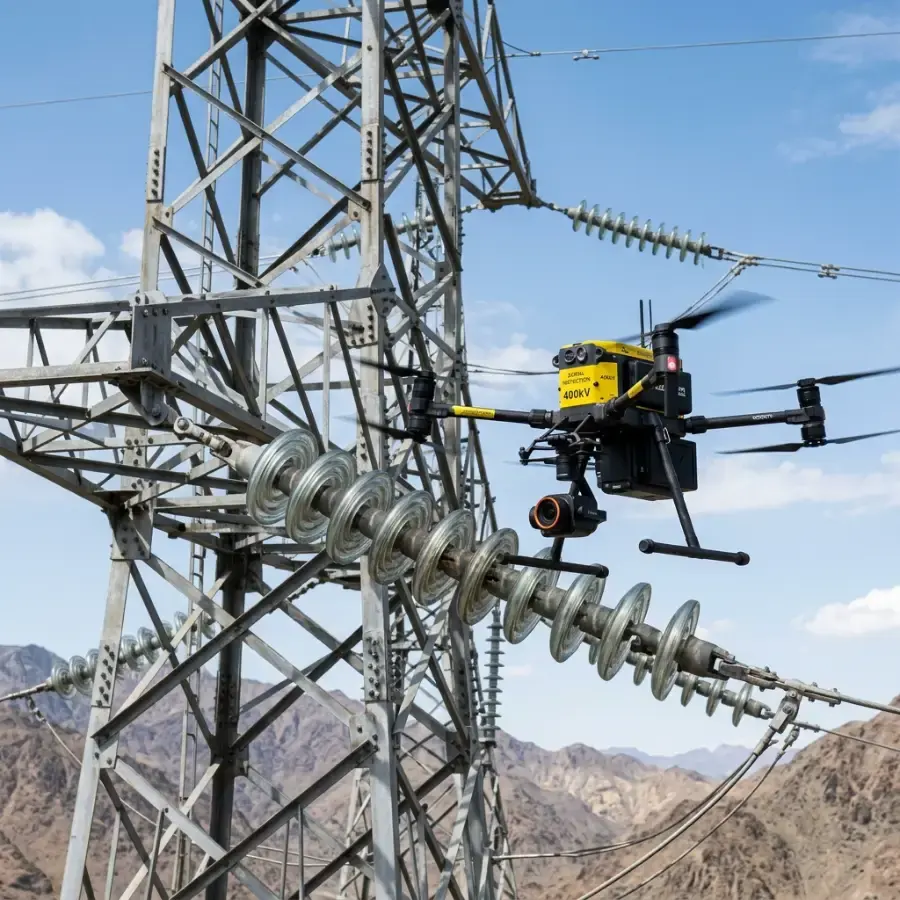
Electrical networks run for thousands of kilometres, and inspecting them on foot or by climbing is slow and hazardous. We inspect transmission…
765 kV corridors inspected up to this voltage class
Explore the serviceDGCA-authorised RPTO No. 23/2025 · Designed and built in India
Case study · Power line inspection
Five drone flights in one day captured 7,630 RGB and thermal images of 25 towers on three double-circuit lines. The review produced 129 findings with photo evidence, five of them urgent, and a repair plan with deadlines.
Telangana · 3 double-circuit lines, about 6 km

The brief was a detailed condition survey of three overhead lines: cracked insulators, hotspots, loose or missing bolts and nuts, structural deviation, solar panels and other attachments, and anything else that affects the line and its towers.
Crossarm tips, earthwire peaks and insulator fittings sit high above fields, a highway and a railway, where they are hard to judge from the ground.
129 findings, none critical. Of these, 5 needed a repair within a month, 54 within three months and 48 can wait for routine patrols. No line component showed a hotspot in 3,815 thermal frames.
The client received a report, a defect register, an annotated photo for every finding and a Google Earth file.
The site
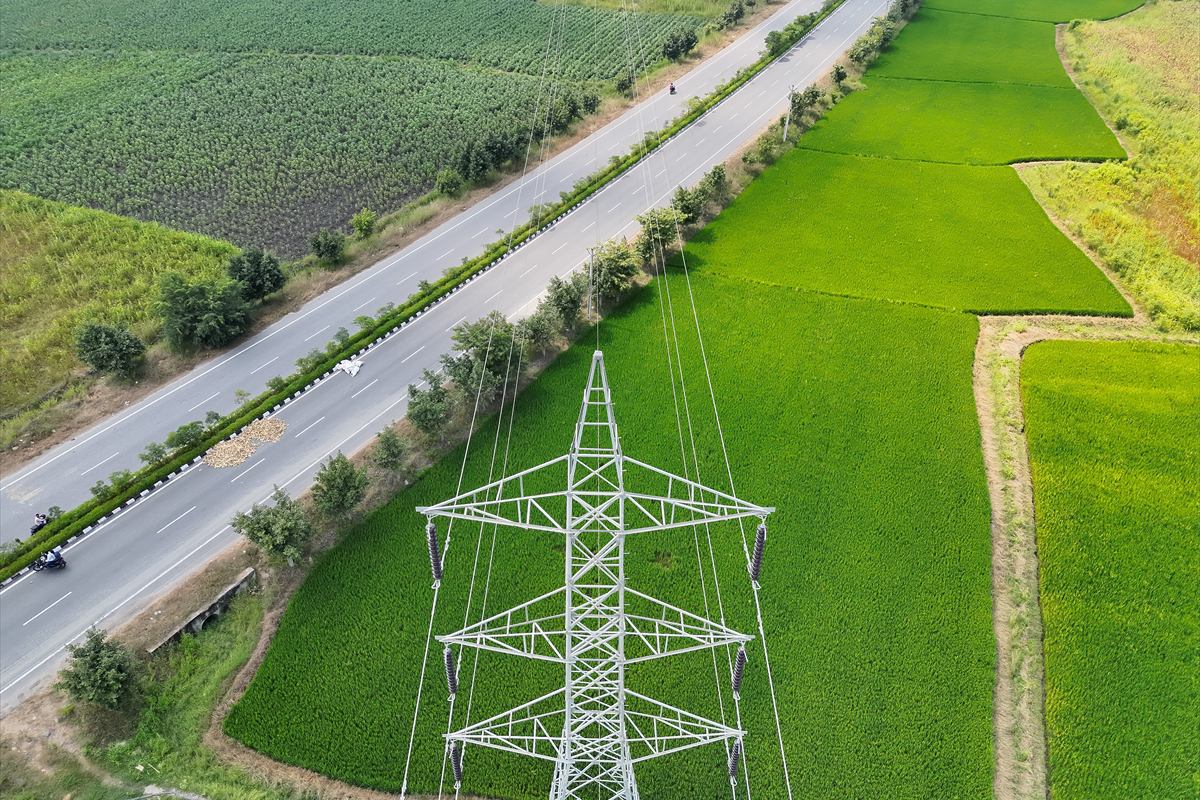
The survey covered three double-circuit lines, about 6 km in all. The first runs east to west across a four-lane highway, paddy and cotton fields and a stone-quarry area. The second crosses the highway and a railway line, with newer composite-insulator towers at the crossings. The third, a twin-conductor line, was inspected over about 1 km.
Method
5 flights · 131 minutes
Wide, zoom and radiometric thermal cameras captured 3,815 paired views over 11.6 km of flight track. Median detail was 3.8 mm per pixel, and one frame in ten reached 0.9 mm or finer.
7,630 images, all geotagged
Software read each image’s position and camera angle, scored sharpness and exposure, and converted every thermal frame to apparent temperature, pixel by pixel. Clustering the laser-rangefinder targets located each tower.
2,225 photos reviewed
Every sharp photo was reviewed, with about 425 full-resolution checks of fittings, peaks and crossarm tips. A coverage audit then found 771 frames the first pass had not shown, and reviewing them added 26 findings.
129 findings
Each finding got a severity, a repair deadline, an annotated photo, a description, an action and a location. Thermal results were graded against the ANSI/NETA temperature-rise bands.
Findings
Most findings were routine maintenance: vegetation hiding foundations, bird droppings on insulators, rust and encroachment in the corridor.
Breakdown
Bases and corridor held 63 of the 129 findings, mostly low priority. The high-severity items were in tower steel, bolts and fittings, a third-party attachment and a bird nest.
| Component group | High | Medium | Low | Observation | Total |
|---|---|---|---|---|---|
| Right-of-way and crossings | 0 | 5 | 14 | 14 | 33 |
| Bases and foundations | 0 | 15 | 14 | 1 | 30 |
| Tower steel | 2 | 7 | 6 | 1 | 16 |
| Insulators | 0 | 5 | 5 | 4 | 14 |
| Earthwire and conductors | 0 | 10 | 2 | 2 | 14 |
| Bolts, hangers and fittings | 1 | 6 | 6 | 0 | 13 |
| Third-party attachments | 1 | 2 | 1 | 0 | 4 |
| Safety fittings | 0 | 3 | 0 | 0 | 3 |
| Bird nests | 1 | 1 | 0 | 0 | 2 |
| All findings | 5 | 54 | 48 | 22 | 129 |
Across the lines, the wider themes were a rust-brown earthwire along all nine towers of one line, bird fouling on porcelain strings, vegetation hiding the foundations at 20 towers, trees under the conductors, an 11 kV distribution line running beneath one circuit, and unauthorised attachments, including a solar panel bolted to the tower bracing.
Evidence
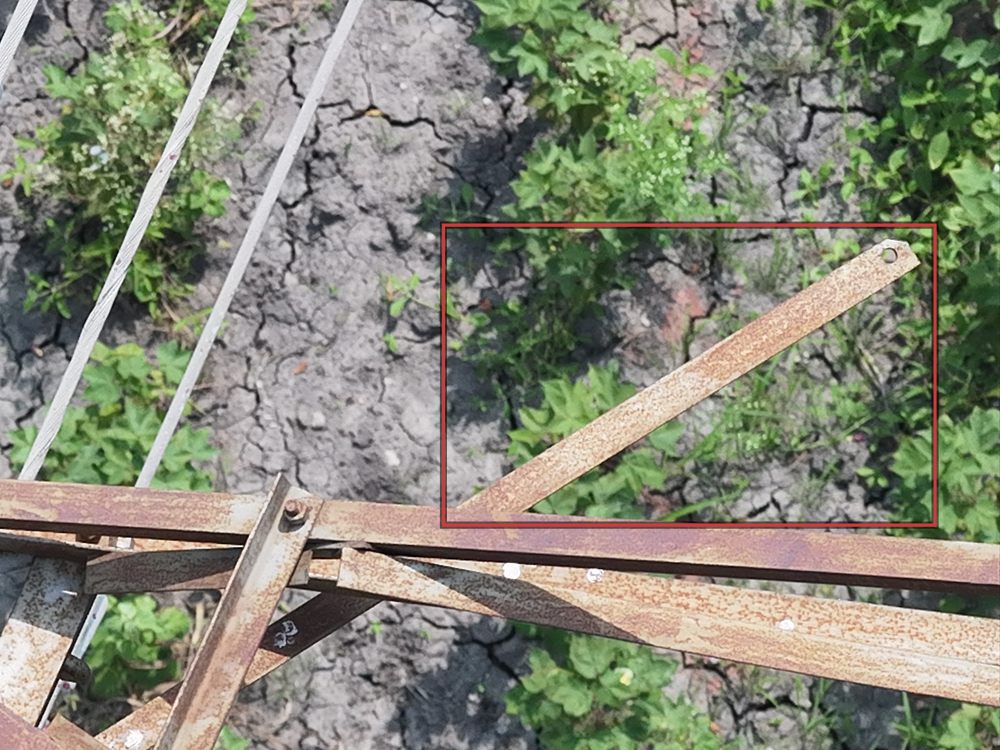
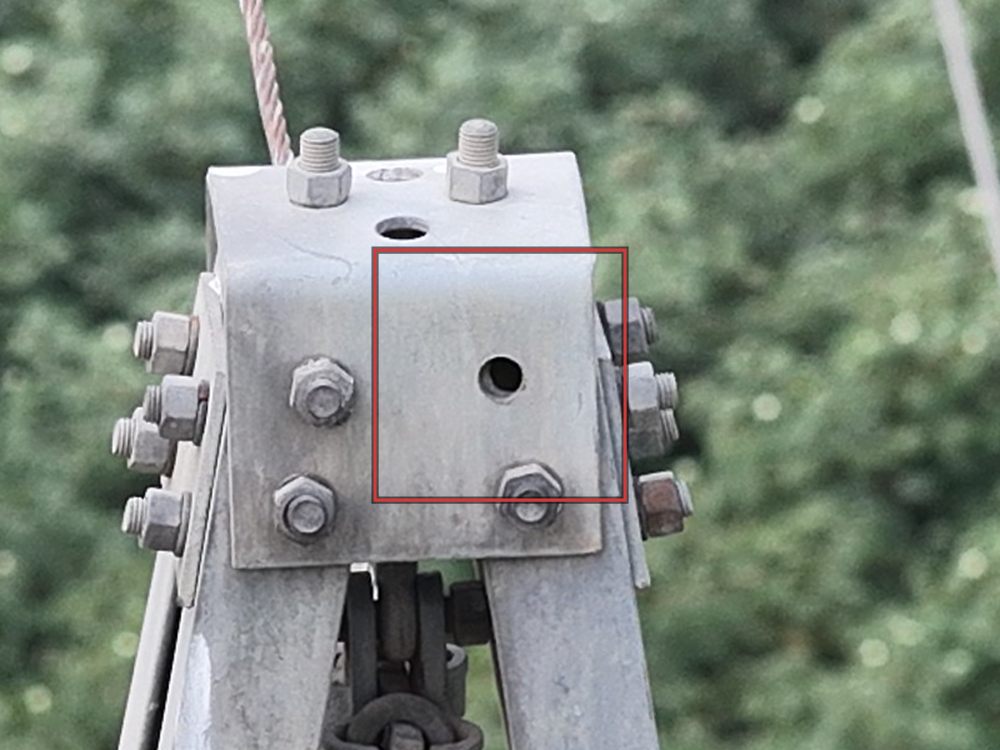
Every finding came with a photo like these, the defect boxed in its severity colour.
High
Detached bracing member
One end of a crossarm brace sticks out with an empty bolt hole, so it no longer braces the crossarm.
High
Missing bolt on a peak cap
Three bolts and one empty hole in a four-bolt pattern. The same cap on the next tower has all four.
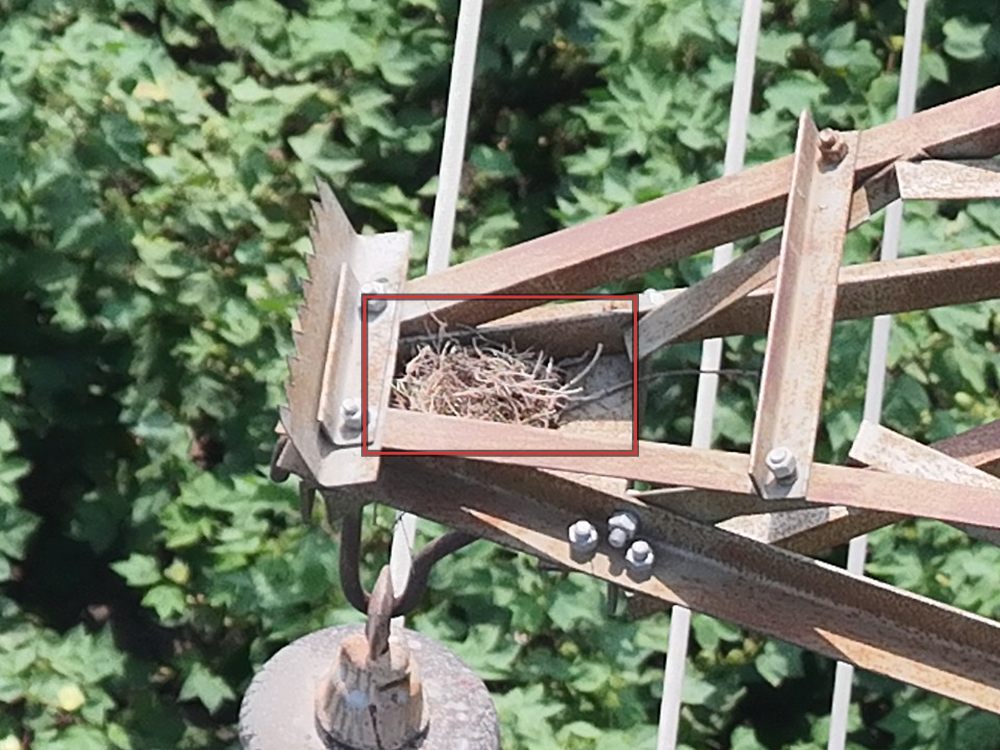
High
Bird nest above an insulator
The nest sat in the crossarm tip directly above the hanger hook of an insulator string.
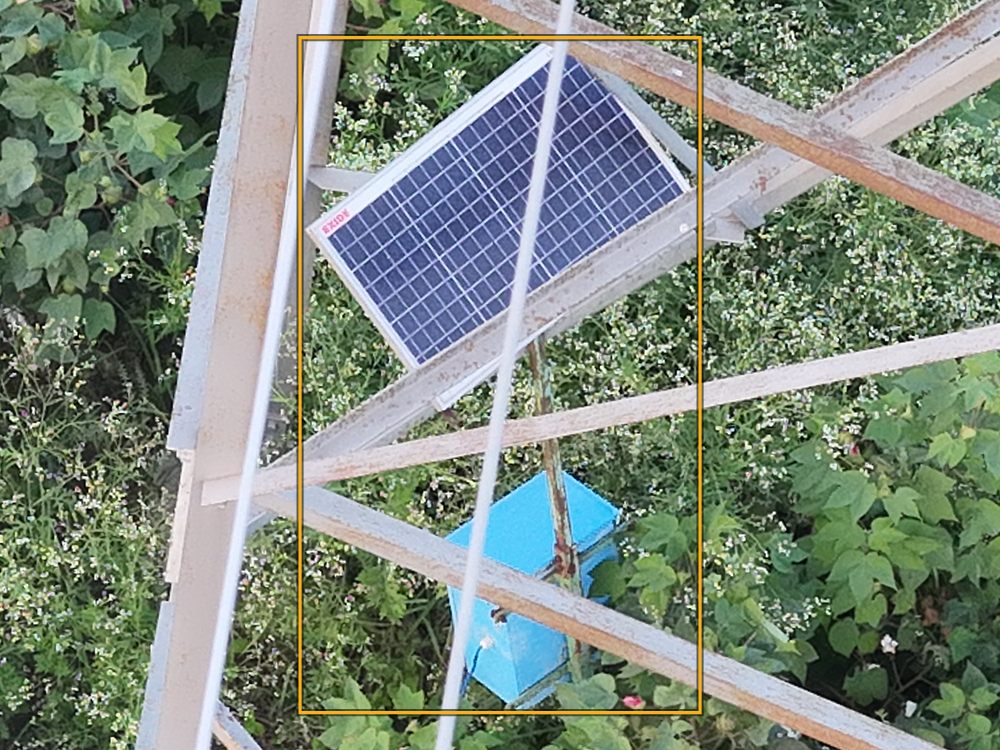
Medium
Solar panel on the tower
A farm device clamped to the bracing. It is an unauthorised attachment that also helps people climb.
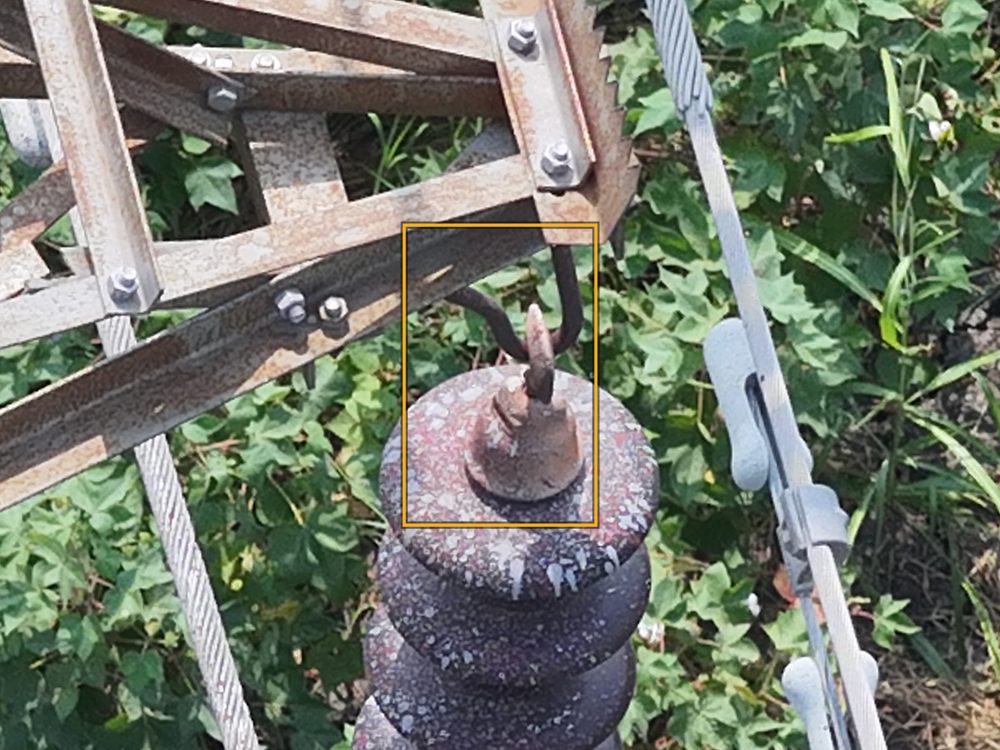
Medium
Rusted hanger hook
The load-bearing hook and top disc cap were rust-brown, so the hook is to be checked for loss of section.
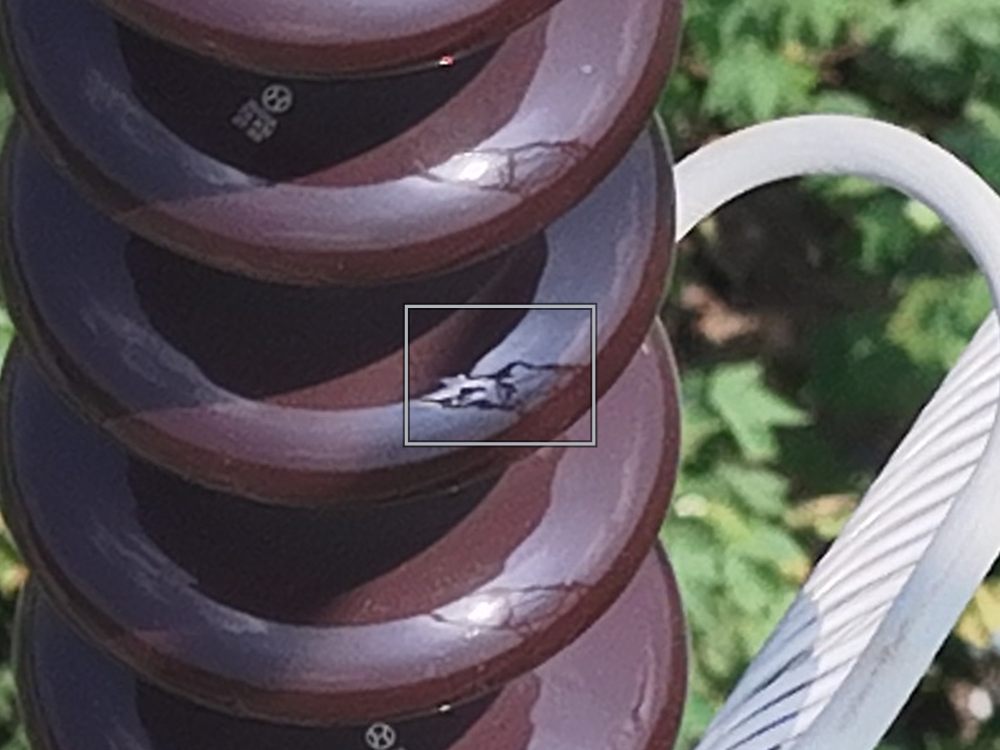
Observation
Crack-like marks ruled out
The dark lines moved between frames. They were reflections of trees in the glaze, and a sharper frame showed no crack.
Thermal
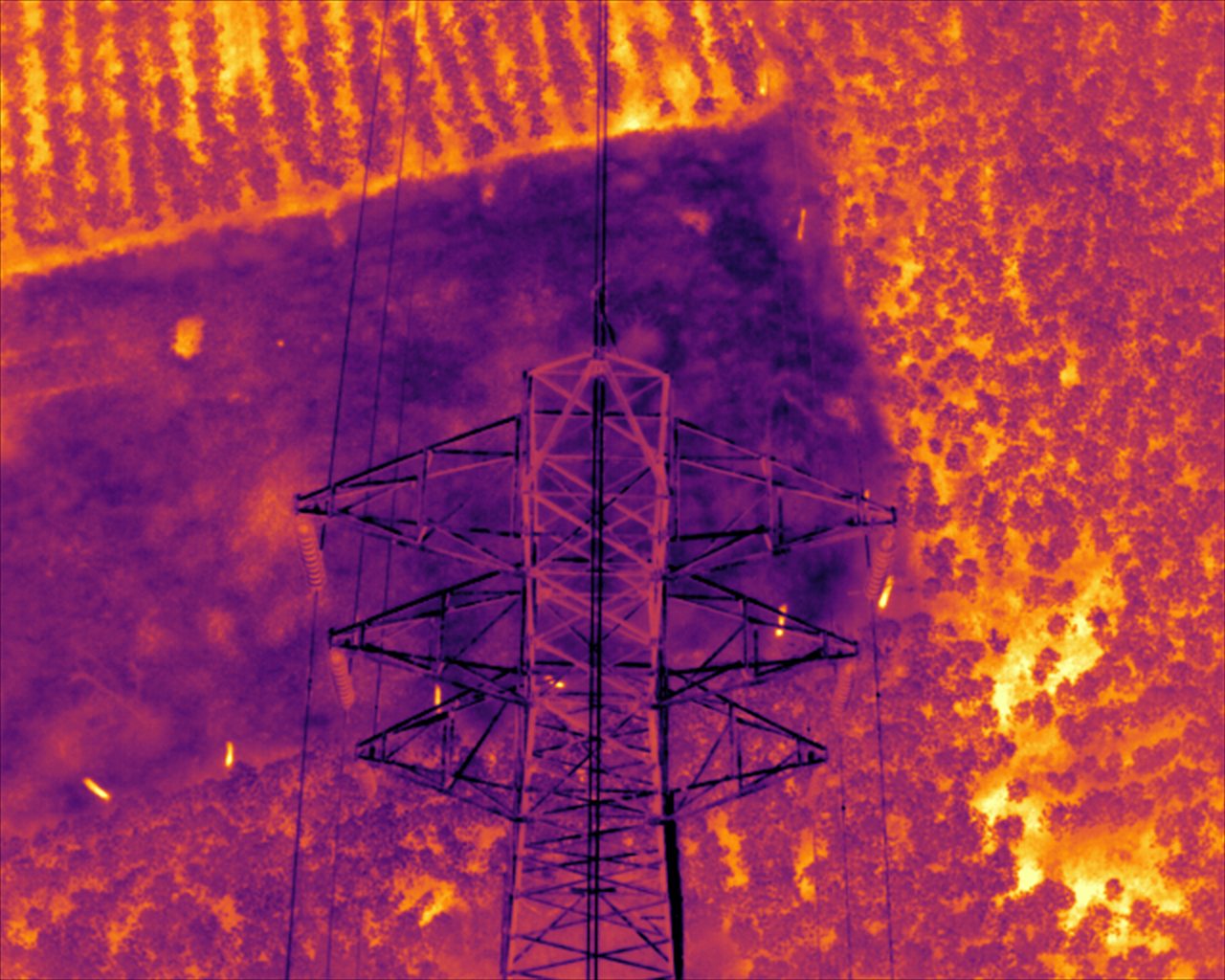
We converted all 3,815 radiometric frames to apparent temperature and searched each one for local heating. Every strong peak traced back to something other than the line. The hottest was a motorcycle on the highway at 97 °C, followed by other vehicles, farm machinery and sun-heated ground.
On the evening flights, a fitting running about 5 K above its surroundings would have stood out. On one tower, two matching insulator strings read within 0.2 K of each other, so their warmth came from the low sun, not a fault.
The circuit load during the flights was not recorded, so we recommended a night re-scan under known load to rule out joints that only heat when the line is heavily loaded.
Deliverables
Maintenance plan
The register sorts the findings into maintenance windows, so crews and materials can be planned straight from it.
Within 1 month
5 repairs
Refit the detached brace, fit the missing bolts, remove the nest and make the third-party wiring safe.
Within 3 months
54 maintenance items
Earthwire corrosion check, rust treatment, insulator washing, base clearing, tree trimming and clearance checks with other line owners.
Routine
48 low-priority items
Litter, drainage and minor rust, handled on normal patrols. Another 22 observations were recorded for reference.
Follow-up
Further checks
A night thermal scan under known load, a daylight re-flight of the towers flown at dusk, and centimetre-level positions from the raw GNSS logs.
Services used
Electrical networks run for thousands of kilometres, and inspecting them on foot or by climbing is slow and hazardous. We inspect transmission…
765 kV corridors inspected up to this voltage class
Explore the service
Visual and radiometric thermal inspection of towers, turbines, solar plants, stacks and structures while they stay in service. High zoom shows the…
1,500+ utility assets inspected
Explore the service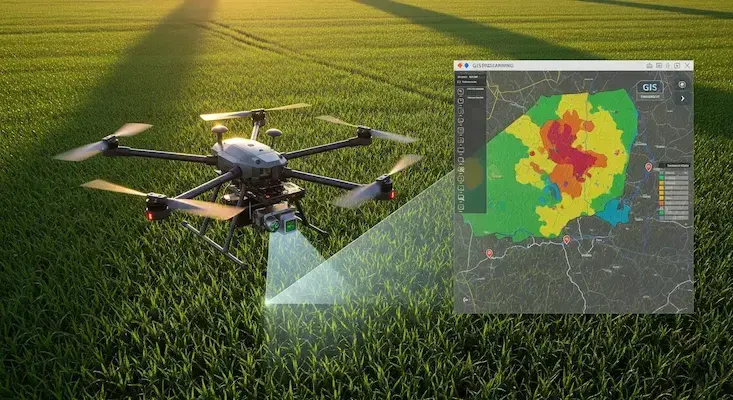
We turn drone and satellite data into GIS layers people can use: classified land-use maps, property and asset databases, crop-health analysis and…
24,000+ properties geo-tagged in one municipal project
Explore the serviceFigures are from the inspection report for the survey of 14 October 2026. The client’s name, line names and tower positions are withheld.
We fly the corridor, review every usable frame and deliver a dated repair plan with photo evidence for each finding.