
DGCA pilot training
Remote Pilot Certificate at our authorised academy, followed by fibre-optic type training.
Learn moreDGCA-authorised RPTO No. 23/2025 · Designed and built in India
Anti-jam FPV · GPS-independent
The Agmay fibre-optic FPV drone is flown through a thin optical fibre that unspools from the aircraft as it flies. Commands and HD video travel as light, so there is no radio link to jam, no signal to detect and no need for GPS.
Why fibre
Jamming, GPS denial, interference and terrain all attack the radio link. Take the radio away, and those threats lose their grip.
Jammers work by drowning out radio signals. Here, commands and video travel as light inside glass, where radio interference cannot reach them.
The pilot flies on the live video feed, so the drone keeps working where GPS is denied and cannot be misled by GPS spoofing.
With no radio transmitter for control or video, the link gives off no signal for direction-finding equipment to detect or locate.
The fibre follows the aircraft over hills, around buildings and into tunnels, where a radio link would drop out.
A wired optical link delivers clear, low-latency video that does not break up with interference or distance.
Substations, power plants, steel works and telecom sites with heavy electromagnetic noise do not disturb the link.
How it works
Compared
The same airframe and camera, with a very different link.
Radio jamming
Agmay fibre-optic droneNo effect: there is no radio link
Radio-controlled FPV droneControl and video can be blocked
GPS jamming and spoofing
Agmay fibre-optic droneNo effect: GPS is not needed to fly
Radio-controlled FPV dronePosition hold and return-to-home can fail
Radio emissions from the link
Agmay fibre-optic droneNone
Radio-controlled FPV droneContinuous, can be detected and located
Behind hills and buildings
Agmay fibre-optic droneThe link follows the fibre
Radio-controlled FPV droneThe link drops without line of sight
Video under interference
Agmay fibre-optic droneStable HD over the fibre
Radio-controlled FPV droneBreaks up as interference rises
What limits the range
Agmay fibre-optic droneThe length of the fibre spool: 5 to 50 km
Radio-controlled FPV droneRadio power, antennas and terrain
| Measure | Agmay fibre-optic drone | Radio-controlled FPV drone |
|---|---|---|
| Radio jamming | No effect: there is no radio link | Control and video can be blocked |
| GPS jamming and spoofing | No effect: GPS is not needed to fly | Position hold and return-to-home can fail |
| Radio emissions from the link | None | Continuous, can be detected and located |
| Behind hills and buildings | The link follows the fibre | The link drops without line of sight |
| Video under interference | Stable HD over the fibre | Breaks up as interference rises |
| What limits the range | The length of the fibre spool: 5 to 50 km | Radio power, antennas and terrain |
Specifications
Specifications vary with the spool length, payload and configuration, and are confirmed in your quotation.
| Range | 5–50 km, set by the fibre spool fitted |
|---|---|
| Flight time | 30–45 minutes, depending on spool and payload |
| Spool options | 5, 10, 20, 30 and 50 km |
| Operating temperature | −10 °C to +50 °C |
| Control and video link | Bidirectional single-mode optical fibre |
|---|---|
| Fibre | Bend-insensitive single-mode (G.657), about 0.25 mm |
| RF jamming | Not affected: no radio control or video link |
| GPS | Not required: works in GPS-denied and spoofed areas |
| Radio emissions from the link | None |
| Video | HD digital, low latency |
| Configuration | Carbon-fibre X-frame FPV multirotor |
|---|---|
| Propellers | 10 to 15 inch, matched to the spool length |
| Power | High-density 6S lithium-ion pack |
| Camera | HD day camera; thermal camera optional |
| Weight class | Small (2–25 kg) under the Drone Rules, 2021 |
| Ground terminal | Optical transceiver with goggle and monitor outputs |
|---|---|
| Pilot equipment | FPV goggles or monitor and a handheld controller |
| Spool change | Field-replaceable spool canister between sorties |
| Link-loss failsafe | Configurable, for example a controlled landing |
| Pilots | DGCA Remote Pilot Certificate holders, with Agmay type training |
| Support | Spools, spares, repairs and annual maintenance from Hyderabad |
Configurations
One aircraft family, three classes of fibre spool.
5–10 km
Buildings, campuses, industrial sites, tunnels and urban areas. The lightest spool leaves the most margin for payload and endurance.
10–20 km
Perimeter security, critical infrastructure and incident response across a wider area.
30–50 km
Border areas, long corridors and wide-area reconnaissance, flown on a larger airframe.
Applications
Wherever a radio link is unreliable, unsafe or unwanted.
Reconnaissance and surveillance where electronic warfare and jamming ground radio-linked drones.
Observation at critical incidents without radio emissions that reveal the operator’s position.
Inspection in substations, power plants and steel works where electromagnetic interference disrupts radio links.
Flying around corners and below ground, where radio and GPS do not reach.
Searching collapsed or crowded structures and urban canyons, even during network outages.
Realistic training for teams that must detect and defend against jam-resistant drones.
Good to know
Fibre-optic flight has its own rules. Our training and procedures are built around them.
Training and support
Remote Pilot Certificate at our authorised academy, followed by fibre-optic type training.
Learn moreReplacement spools, spares, workshop repairs and annual maintenance from Hyderabad.
Learn moreOur DGCA authorisation, airspace procedures and how we keep operations lawful.
Learn moreEnquiry
Tell us your organisation, the range you need, the mission and the number of aircraft. We will come back with a configuration, training plan and quotation. Supplied to government, defence, law-enforcement and authorised enterprise customers, subject to the Drone Rules, 2021 and applicable approvals.
Monday to Saturday, 9:00 am – 6:30 pm
FAQ
FPV range
 SpeedyBee · supplied by Agmay
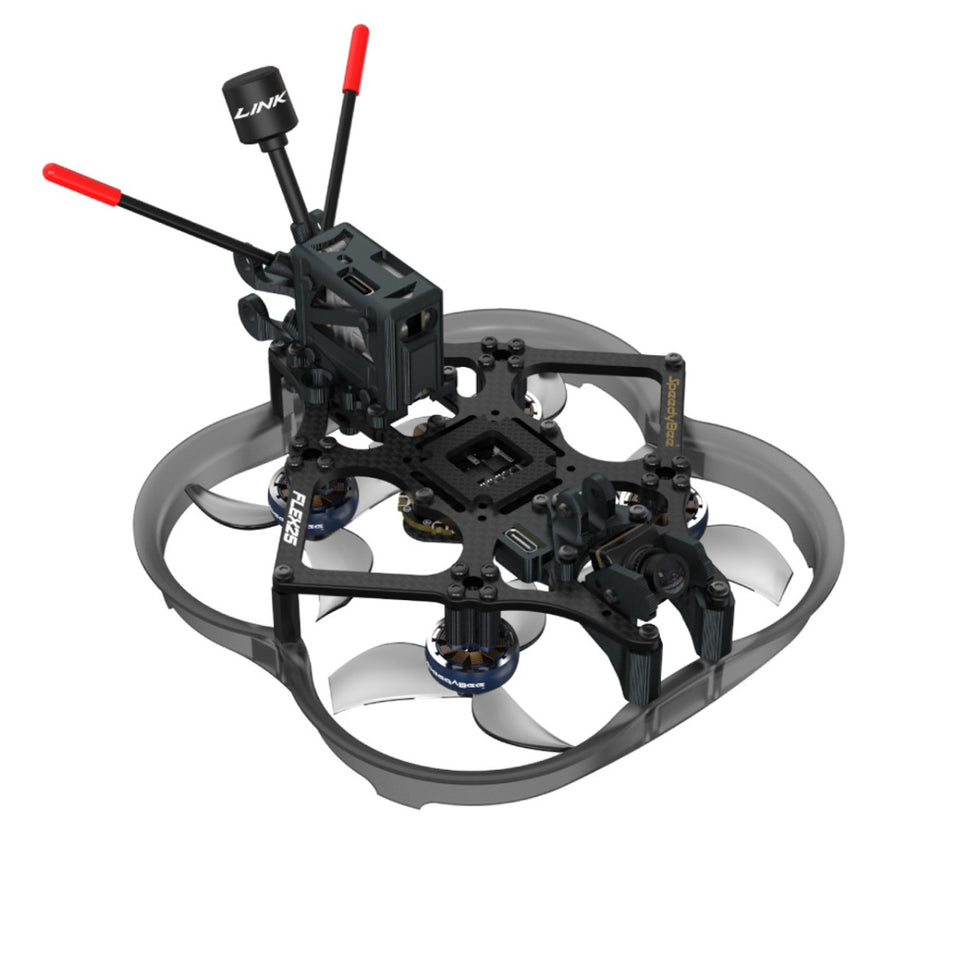
2.5-Inch HD Cinewhoop
Ducted 2.5-inch cinewhoop with a RunCam Falcon 120 fps digital camera, for smooth indoor and close-up filming
 FPV fleet
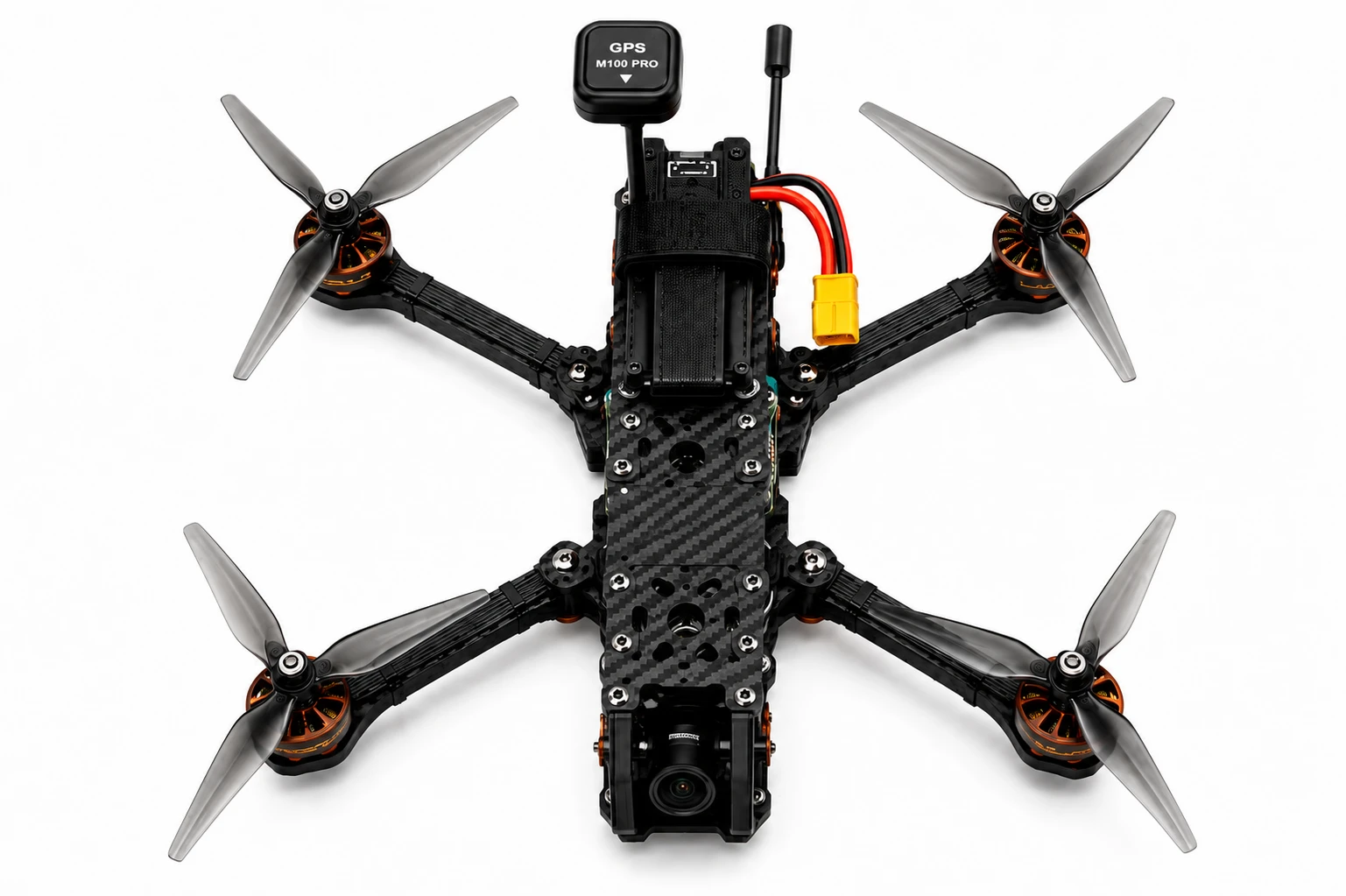
High-Speed Tactical FPV
Ultra-fast 5" carbon quad with 165 km/h top speed for pursuit & cinematic chasing
Long-Range Recon FPV
7" long-endurance FPV quad with a 10+ km video link and GPS rescue for patrol and inspection
Heavy-Lift Tactical FPV
10" powerhouse capable of carrying 4kg payload for tactical drop & transmission line audit
Looking for long range over radio instead? See the 7-inch long-range FPV.