Drone services · Inspection

Drone Solar Panel Inspection and Cleaning

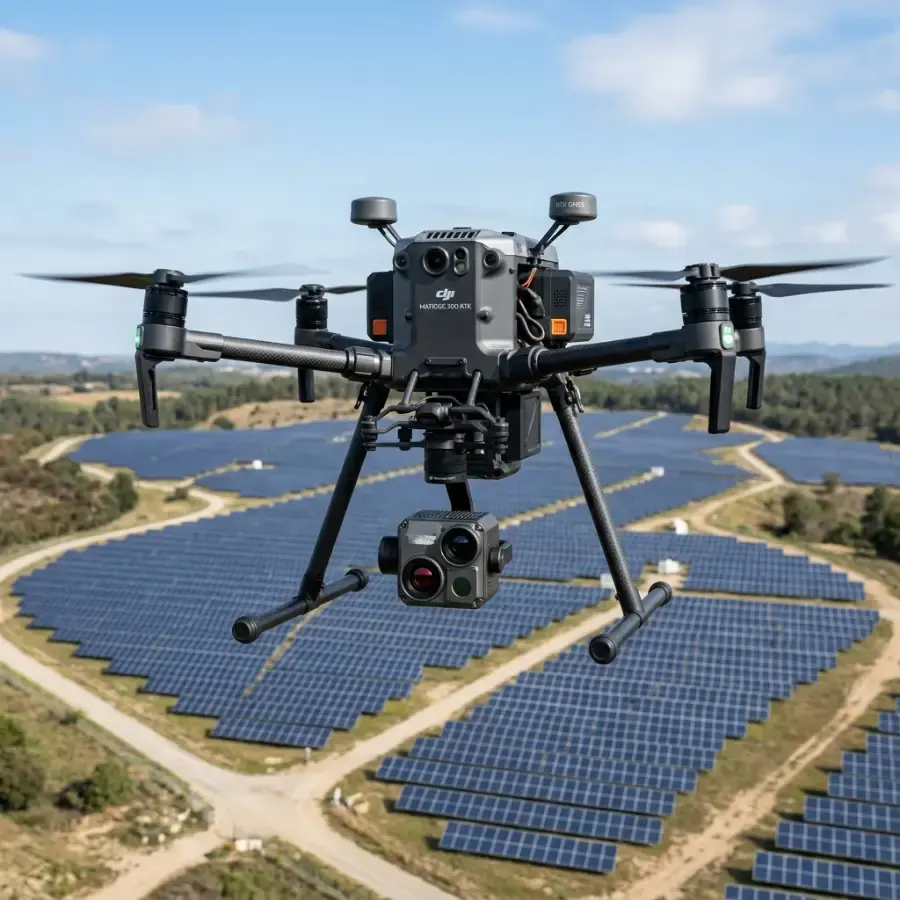
Thermal and visual inspection for utility-scale solar farms and commercial rooftops, with every defect located on a map. The same data guides drone cleaning, so water and effort go only where panels are soiled.

DGCA-certified pilotsAirspace checked on Digital Sky
HotspotScanned rowUp to 90% fasterUp to 70% less water

Results

faster than manual inspection
up to 90%
less water when cleaning
up to 70%
report turnaround
24–48 h
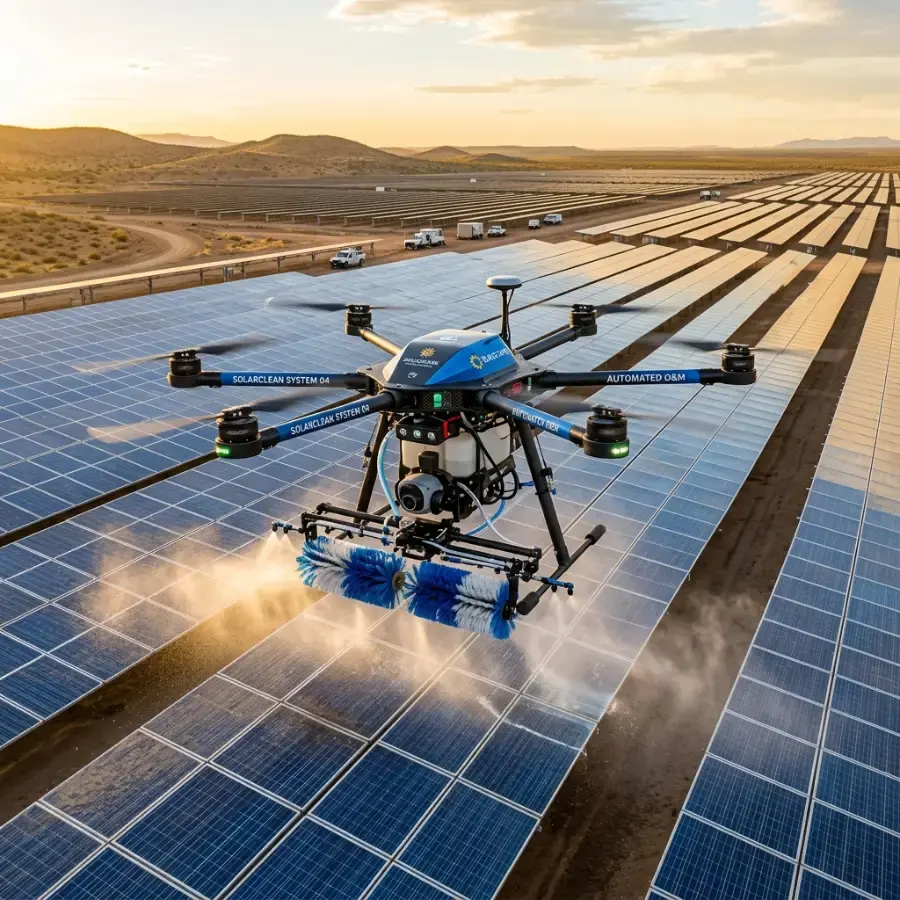
Drone flying over a utility-scale solar farm

Why use drones

What solar inspection and cleaning gives you

  • Thousands of modules inspected in a single flight while the plant keeps generating
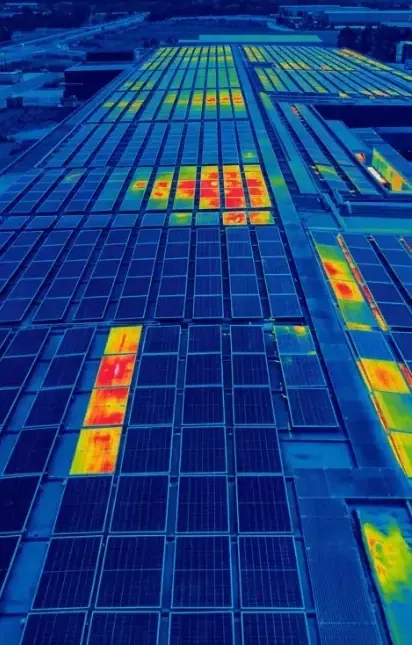
  • Thermal imaging finds hotspots, failed bypass diodes, string faults and PID
  • Visual imaging finds cracked glass, soiling, vegetation and bird droppings
  • Every defect is GPS-tagged so technicians walk straight to the module
  • Cleaning by dry brush, soft brush or low-pressure water mist to suit the module

Comparison

Drone cleaning compared with manual cleaning

Figures from our standard operating procedures and completed projects.

Water consumptionLower is better
Agmay droneUp to 70% less
Manual cleaningHigh
  • People on roofs or panels

    Agmay droneNone

    Manual cleaningCrews at height

  • Speed

    Agmay droneThousands of panels a day

    Manual cleaningSlow, row by row

  • Records

    Agmay droneDigital report with before and after imagery

    Manual cleaningPaper-based

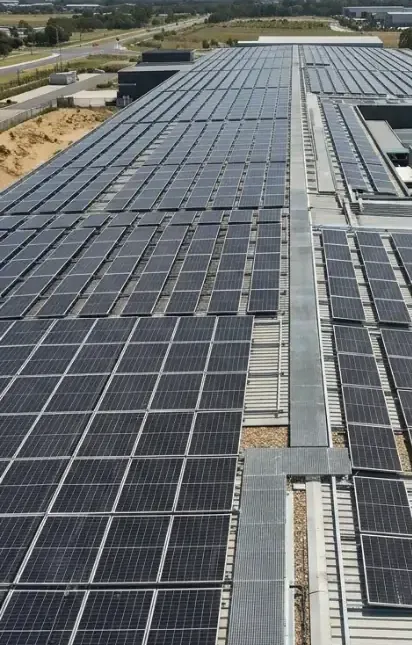
A rooftop solar array in visible light and in thermal infrared, where faulty modules show as hot patchesVisible lightThermal infrared
Illustrative comparison: faults that are invisible to the eye show up as hot patches in the thermal image.

See the difference

Drag the divider to compare visible light with thermal infrared.

Applications

Where we use it

  • Thermal inspection

    Thermal inspection

    Infrared thermography of every string and module.

  • Panel cleaning

    Panel cleaning

    Dust, sand and droppings removed without foot traffic on modules.

  • Plant mapping

    Plant mapping

    An orthomosaic and digital twin of the array for asset records.

  • Rooftop plants

    Rooftop plants

    Factories, warehouses, campuses and hospitals inspected without roof access.

How it works

From enquiry to delivered data

  1. 1

    Site assessment

    Plant layout, string map and soiling conditions are reviewed.

  2. 2

    Inspect

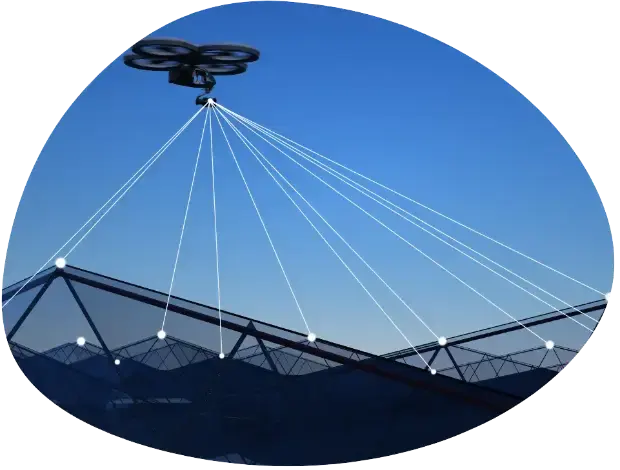
    RGB and thermal imagery of every panel is captured in planned flight lines.

  3. 3

    Analyse

    Hotspots, faults and heavily soiled modules are identified and mapped.

  4. 4

    Clean

    Cleaning is carried out where it is needed, by the method suited to the module.

  5. 5

    Verify and report

    A repeat scan confirms the result and a report sets out findings and recommendations.

Deliverables

What you receive

  • RGB and thermal imagery with an orthomosaic of the plant
  • GPS-tagged defect report by type and severity
  • Cleaning report with before and after imagery
  • Maintenance recommendations for the O&M team

Aircraft we use

Video

See it in the field

Agmay drone inspection of solar panels using thermal and electroluminescence imaging in Karnataka

FAQ

Frequently asked questions

See all questions

How often should solar panels be cleaned?

It depends on dust, pollution, rainfall and vegetation at the site. Many utility-scale plants clean every few weeks or months; inspection data helps set the right interval for yours.

Can drones clean rooftop solar panels?

Yes, where operating conditions allow, including commercial and industrial roofs such as malls, warehouses, factories and hospitals.

Will cleaning damage the panels?

No. The method (dry brush, soft brush or water-assisted) is chosen for your panel type and the manufacturer’s specification.

Do inspections interrupt generation?

No. Inspection is non-contact and is flown while the plant operates. Cleaning works row by row with minimal disruption.

How often should a plant be inspected?

Every 6 to 12 months is typical, with extra inspections after hail, storms, lightning or unexplained drops in output.

Related

Related services

Enquiry

Get a quotation for solar inspection and cleaning

Share a few details and the right person from our team will get back to you with a plan and a quotation.

Monday to Saturday, 9:00 am – 6:30 pm

We use your details only to answer this enquiry. See our privacy policy.